


A WHOLE DIFFERENT BREED
The actor John Cusack is great at observing things, or at least he plays characters who are. On the subject of today’s Top Ten, John Cusack told it exactly like it is:
“I have a good friend who’s a Texas girl. Texas girls are a
whole different breed.”
Having lived with a Texas girl for 41 years, raised two more for a combined 68 years, and admired the spirit of thousands of other Texas women, my own powers of observation confirm John’s thoughts. The question is, what makes Texas women so special?
Most are physically tough because we love the outdoors. We live in the Bible Belt, so I guess that there is a deep faith that helps women navigate challenging times. Texas men have always been apt to go on long trips (Texans originated the cattle drive and space travel), so Texas women have long thought little about taking charge.
All three of those are true, but they do not quite get to the essence of why Texas women are different. The cherry on the cake for me stems from the fact that we have a separate, additional identity. For better or worse, most of us think Texas could stand on its own because it once did stand on its own. Above all, Texas embodies optimism.
Throughout our history, we have looked at the worst and dreamed of the best. The Alamo and Goliad fell, and we used it as fuel. Every boom was big in Texas, but the busts were just as big. We almost lost the entire Panhandle during the Dust Bowl, but we somehow managed to make it productive again. Texans went to fight World War II at a rate higher than any other state, and Texans returned to a state that just kept going.
Texas women made that happen by combining Western freedom with Southern charm and manners. Time and again, Texas women dared to look at situations that should befuddle us, cow us in sorrow. Instead, they saw the promise of what could be, and they fought for it.
There have been millions of them, and there are millions more today. They dream and then they act. They get knocked down, and they rise back up. Picking just ten was impossible, so consider the list representative – who were the women modeling a take-no-prisoners spirit because they saw better things ahead? Besides your wife, your mom, and your daughters, it was the following.
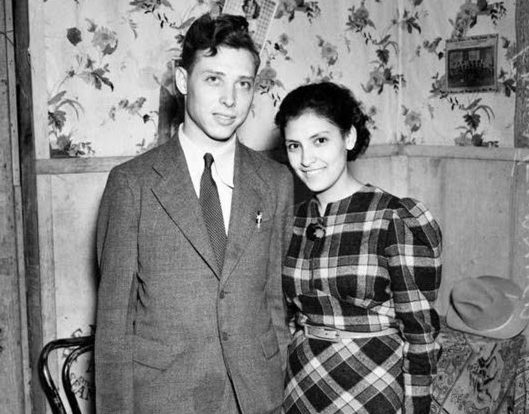
Photo Credit Public Domain via Wikimedia Commons, Source Tenayuca Family
Emma Tenayuca was born in the wrong place at the wrong time. In the 1920s/1930s San Antonio, Emma’s grandparents instilled in her a strong sense of Hispanic identity, at a time when so many faced the urge to assimilate above all else. The depression arrived, and American society came close to crumbling. As always, when calamity strikes, our impulse is to believe we can survive and advance at the expense of others. “Others” meant Emma and her family.
Emma was all of 22 years old in 1938, but she quickly discerned that the New Deal’s benefits were not equally dispersed. The Hispanic West Side of San Antonio was a crowded, insanitary slum, not fit for beasts, let alone humans. San Antonio police were unaware that West Side residents possessed any rights.
Something about the spirit instilled by her grandparents would not let Emma accept that things had to be this way just because they had always been that way. She began organizing, first her co-workers at the Gunter Hotel and then more famously, the pecan workers in San Antonio. When the workers struck to protest a pay cut, they chose this young firebrand as their leader.
It was a daunting project. Organized labor was anathema in Texas, let alone organized Mexican labor. And there was one more problem–Emma had joined the Communist Party. As shocking as that sounds today, it looked different during the Depression. Communism was an economic solution that gained more appeal when capitalism ceased to function effectively. For a short period, communism was not automatically defined as un-American by everyone (not that Emma would have cared). Still, union leaders knew that the company would bludgeon her with that title.
So they removed her as the official leader of the strike, while keeping her as the actual leader of the strike. She fought long enough and hard enough to bring the company to the table and strike a deal protecting her people. Her impact was more significant than the factory.
A young congressman named Maury Maverick had supported Emma’s efforts. Maverick was the grandson of Samuel Maverick, a signer of the Texas Declaration of Independence and legendary rancher. After being the sole Democrat to support an anti-lynching bill, conservatives led by Uvalde congressman John Nance Garner marked him for extinction, and Maverick lost his 1938 primary.
Through Emma, Maverick saw firsthand the power of a unified West Side. Inspired by Emma, Maverick ran for and won the mayor’s office in 1939 on the strength of the Hispanic vote. Although the fight had just begun, Emma laid the groundwork for Hispanics to be the face of leadership in a major American city. When San Antonio elected westsider Henry Cisneros mayor in 1981, he became only the second Hispanic mayor of a major city in American history (Raymend Telles of El Paso in 1957 was the first). In many ways, Cisneros had Emma to thank for that success.
Emma left San Antonio for Houston after the strike. In 1946, she renounced her membership in the Communist Party and relocated to California to teach. She eventually returned to San Antonio, where scholars and historians recognize Emma’s work as foundational. Emma Tenayuca is on the list because she was fearless and ahead of her time.
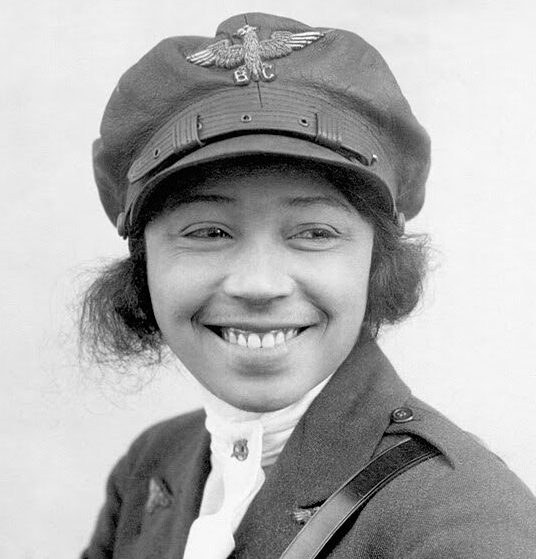
Photo Credit Public Domain via Wikimedia Commons, Source Unknown
Bessie Coleman was born in Atlanta, Texas, in 1892, as the tenth of thirteen children. Her parents were sharecroppers, her dad was mixed-race African American and Native American, and her mom was African American. At age two, the family moved to Waxahachie, where Bessie grew up. What are the odds that a child who is that poor and who faced deep-rooted discrimination on two fronts could scratch out a life worth living?
Bessie Coleman beat the odds, and then some. Bessie became the first African American woman and the first Native American to hold a pilot’s license, as well as the first African American to win an International Pilot’s license. She did it “the American Way” by hard work and innovative thinking.
Although an exceptional student, Bessie had enough finances for just one semester at college. Forced to drop out, she made her way to Chicago to live with her older brothers. Working as a manicurist, she overheard tales of World War fliers and it fired her imagination. Bessie took on a second job and began saving for flying lessons.
Her problems were threefold: money, race, and gender all worked against her. She found support from a Chicago newspaperman who publicized her plight. In an early version of GoFundMe, they raised enough to send Bessie to France for pilot training. She earned her wings there and later returned for advanced training.
Bessie was an African American woman, but it soon became clear that she could fly with anybody. Bessie’s daredevil stunts amazed audiences everywhere, and she earned fame. Bessie was a tireless promoter, but fortune was not as easy to come by. One reason was that she refused to perform at any show where African Americans were not welcome. Eventually, her drawing power changed minds.
More importantly, Bessie’s fame and story inspired women generally and African Americans of both genders to dream big. Mae Jamison, the first African American woman to travel in space, cites Bessie as her inspiration.
Bessie’s story ended too early, at age 28. On a practice run for a show in which she was going to parachute from her plane, her mechanic was flying the plane. A loose wrench stuck in the controls, flipping the plane over and ejecting Bessie. The mechanic could not recover, and he also died.
Bessie’s funeral in Chicago was an event, attended by 10,000. The pastor’s eulogy noted, “This girl was one hundred years ahead of the Race she loved so well, and by whom she was least appreciated.” Bessie is on the list because if any Texas woman ever reached for the sky, it was Bessie Coleman.
Photo Credit Public Domain via Wikimedia Commons
Molly Ivins reminds me of a book title for a FDR biography – A Traitor To His Class. Molly grew up in affluent Houston, attending St. John’s School. She went to college at Smith and graduate school at Columbia. Her earliest political memory was not being able to understand why equal rights for African Americans was a complicated subject. She saw the essential truth – we are all human, and we all deserve human rights. It never mattered to her that the circles she ran in tried to complicate things.
That thought process served Molly and her readers well for decades. When she became a political writer in Texas, she understood that the legislature was as corrupt as could be, and that everyone in Austin knew it. She did not overcomplicate things: corruption was bad, and we should write about it. Molly did Woodward and Bernstein before the Watergate scandal, except that she did not need the back alleys and anonymous sources. People just told her what they knew.
Which was the second component of Molly’s genius. Her bigger-than-life personality and searing wit gave her entrée to power brokers whom she simply disarmed. The result was something absurdly rare in political reporting, crucial work that was entertaining. At her height, over 400 papers published Molly’s column. She wrote seven books, two of which were best-sellers.
Through alcoholism and cancer, Molly kept smiling, kept us laughing, and kept working. She never lost sight of her North Star, which was to give voice to the voiceless. Molly Ivins makes the list because she lived the motto “To thine ownself be true.”
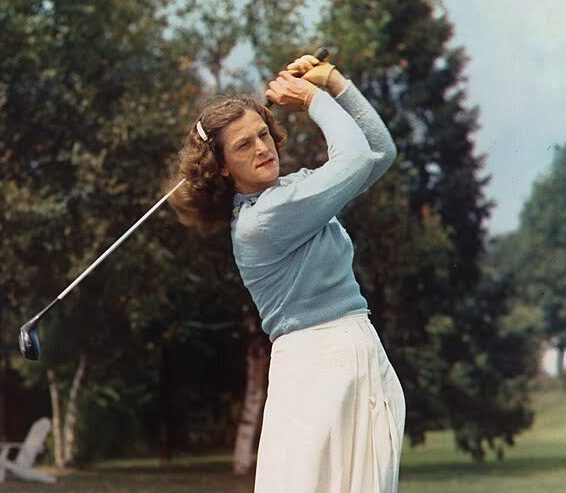
Photo Credit Public Domain via Wikimedia Commons, Photo by Harry Warnecke
Simply put, Babe Didrikson Zaharias, born in Port Arthur and raised in Beaumont, was the greatest female athlete of all time. Her feats are legendary. ESPN’s rankings of the top 100 athletes of the twentieth century have her first among women and number 10 overall, between Jack Nicklaus and Joe Louis.
She first came to the world’s attention for her basketball exploits. In the early 1930s, “professional athletics” was all about company teams. Babe played for the Employers Casualty Company of Dallas (the “Golden Cyclones”) straight out of high school, leading the team to three consecutive national championships.
Next came track and field, where there were two essential competitions — the AAU national meet and the Olympics. In 1932, Babe “won the AAUs.” There were ten events; Babe entered eight and won five of them. Combined with the other points she scored, Babe won the team title as the only member of her team. The second-place team consisted of 22 athletes.
Although she qualified to participate in five Olympic events, only three were allowed for women. She chose the javelin, the hurdles, and the high jump. She won all three, but the high jump was a tie. She lost out on that gold medal because the judges were unsure about the “western rollover” style. On objective measurement, however, she was the best in the world in three events: running, throwing, and jumping.
Babe’s greatest fame came in golf, where she won a combined 82 professional and amateur tournaments. She was a founding member of the LPGA. Her career culminated with a 12-stroke victory at the women’s U.S. Open. That dominance over the field would have been remarkable by itself, but the circumstances around it told us even more about Babe’s toughness.
In 1953, the doctors diagnosed Babe with cancer. Surgery followed, and the prognosis was that Babe would never play golf again. It was unwise to tell Babe what she could not do. She won the tournament while wearing a colostomy bag.
Most of us have heard of Babe, and we assume she was a freak of nature. She was, but not in the way we think. Babe was not abnormally muscular. At the 1932 Olympics, she measured 5’5” and weighed 115 pounds. Instead of a huge size advantage, Babe’s body just worked in perfect harmony. There is no other explanation for the vast variety in her accomplishments: throwing, jumping, running, and the dexterity required in basketball and golf combined in one spot. And we won’t even discuss her swimming, bowling, and tennis exploits.
Of course, Babe knew she had this exceptional talent early in life. She embraced it rather than trying to hide it. When asked about her goals, she was direct: “My goal was to be the greatest athlete that ever lived.” Today, we would think little about a woman of Babe’s accomplishments saying that. Babe, however, lived in a different world.
If a woman could run faster than you, jump higher, throw or dive a ball farther than you, that made you less of a man. The response of choice was a bitter, ugly innuendo. In many eyes, Babe’s accomplishments made her less human. Imagine reading this from a newspaper column: “It would be much better if she and her ilk stayed at home, got prettied up and waited for the phone to ring.” Babe paid no heed, at least publicly, as she attacked life and competition with the fury of a champion. There was no false modesty or faux feminism in her. She just wanted to play and win. So she did.
The one thing she could not beat was cancer. She succumbed at 45 years old, an ironic end for a body that had functioned so well. Even that battle was telling. Babe was open about her condition. She was just as open about the impacts of her condition; a woman telling the world she was wearing a colostomy bag was unusual.
There is no telling the impact Babe Didrikson Zaharias had on millions of women and, hopefully, on a few men. She makes the list not based on her physical toughness, but because her self-belief showed us that competition was as vital to girls as it was to boys. After all, her favorite quote was “You can’t win them all. But you can try.”
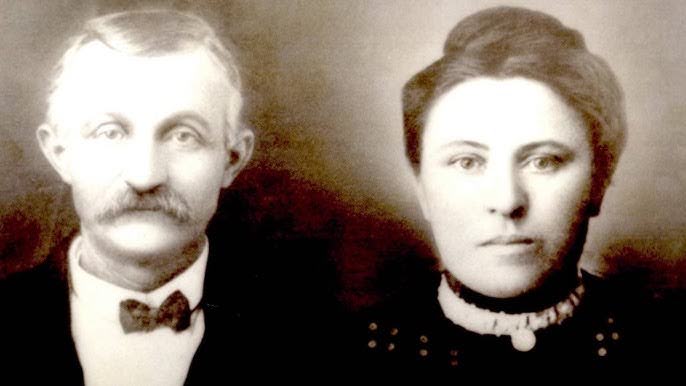
Photo Public Domain
Paula Losoya Taylor’s family came from Northern Mexico, but likely supported the Texians in their revolution. She married Pennsylvanian James Taylor; around 1860 the Taylors and Paula’s sister Refugia moved from San Antonio to the area we now call “The Valley.” There, they claimed the Losoya land near where Santa Felipe Creek joins the Rio Grande River.
Paula and her sister began cultivating the land, providing employment to many locals and drawing even more people to the area. In 1871, the family led a community ditch-digging exercise that created acequias for irrigation purposes. James Taylor died in 1876, but Paula was just getting started.
The water from the acequias turned her property into profitable sugarcane fields. Paula added a sugarcane mill, a flour mill, a gin, and a Mexican candy factory. She donated 60 acres of her land for a fort to ward off Indian raids, and built the first catholic schools in town. Her efforts led to the development of Del Rio; she is essentially the city’s “founding mother.”
Texas has a long history of businesswomen who took matters into their own hands. They dot the honorable mentions below. Paula Losoya Taylor makes the list because she was the first, an impresario of the highest order who built a business and a city.
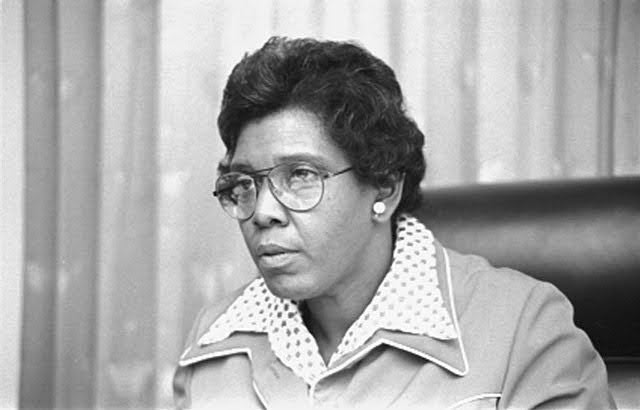
Photo Credit Public Domain via Wikimedia Commons, Photo by J. O’Halloran
Those of us who remember Barbara Jordan probably recall the voice most of all. Deep and rich, it was an instrument that commanded attention. And once she had your attention, she had you. Behind that voice lay an undeniable moral clarity and forcefulness.
Jordan grew up in poverty in Houston’s Fifth Ward. Her father was a pastor, and her mother often spoke in public, so it is clear how Barbara developed her eloquence. After graduating from Houston Wheatley, she excelled at Texas Southern University and then again at Boston University’s Law School. She then ran into reality.
Law firms did not hire black lawyers, no matter their obvious talents. So she set up shop on her own in Houston, taking a part-time job as a judge’s secretary to make ends meet. In addition to brains and eloquence, Barbara had ambition. Her work for the Kennedy campaign in 1960 fired her interest in politics. She ran unsuccessfully for a state house seat in 1962 and 1964. She finally broke through, winning a state senate seat in 1966, the first African American elected to the Texas Senate since Reconstruction. While running for the U.S. House of Representatives, the Texas Senate elected her as its president pro tempore. That election made her the first African American woman in American history to preside over a legislative body.
Jordan’s political rise came at a price. She achieved success in a world dominated by white men. They came to understand her intelligence and command of the political process because she worked to get things done; she was willing to compromise. Her natural constituency– African Americans, other minorities, women– had only recently been admitted to the game. What seemed like slow but sure progress to Barbara was a “cop out” to those who dreamed of instant equality. So Barbara Jordan’s mail was an interesting mix of racist hate and Uncle Tom accusations.
Barbara did what she always did, which was push forward, secure in her own convictions. She won the race for the U.S. House, becoming the first African American elected to the House from a southern state in the twentieth century. Right before he died, Lyndon Johnson used his influence to secure Barbara’s appointment to the Judiciary Committee. That was a natural fit and somewhat unusual for a freshman representative, but at the time, no one gave it much thought.
Eighteen months later, everyone was thinking about Barbara Jordan. On July 25, 1974, the Watergate impeachment hearings began with statements from the committee members. As the junior member, she spoke last. The timing proved fortuitous as the hearing ran long and Barbara ended up talking in prime time to a huge television audience.
Barbara was no firebrand; she rooted her politics in a clear and moral vision. She spoke at a moment of division and doubt to a troubled nation. She began by noting that her role on the committee came only after years of injustice; that, as great as our founding fathers had been, they had not offered her the protections of the Constitution. Nevertheless, after almost two centuries of slow and painful progress, she was now part of “We the People.” Then she said something surprising and reassuring:
“My faith in the Constitution is whole; it is complete; it is total.
And I am not going to sit here and be an idle spectator to the
diminution, the subversion, the destruction, of the
Constitution.”
She continued for 13 minutes of brilliance. Barbara’s remarks set the tone for the hearings and, as much as possible, recast the issue as one of governance rather than politics. In retrospect, it seems that Barbara also spoke to all the people who wrote her hate letters. She reminded the racists and sexists of all that had gone into earning her a seat at the table. She reminded the radicals that her seat at the table was proof that the American dream was not an empty promise. She reminded everyone that we are a nation of laws, not men.
Texas had women and minority politicians before Barbara Jordan. She is on the list because she was the first such politician of national consequence, one who earned her position through an unshakable belief in our system and in herself.
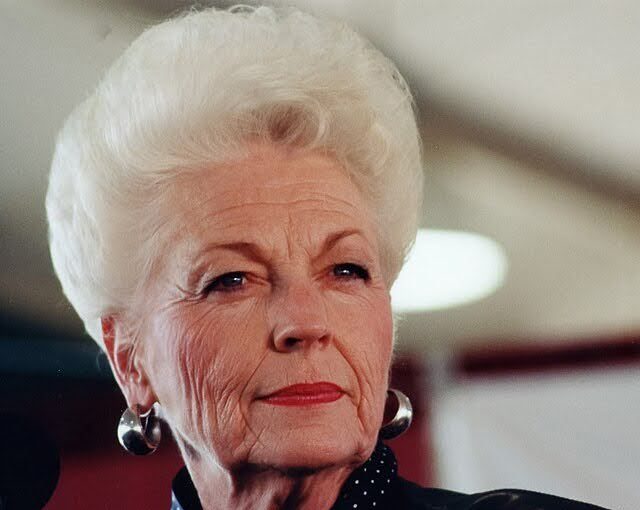
Photo Credit Public Domain via Wikimedia Commons, Photo by Kzirkel
Ann Richards, born Dorothy Ann Willis, is one of the few people on earth who could have played herself in a movie. She was larger than life, with charisma and charm that propelled her to the highest levels of politics. It is difficult to believe that this paragon of feminism never wanted the role of a lifetime.
Ann was born poor in Lacy Lakeview, a small Waco suburb. She believed education was her way out. Earning a debating scholarship to Baylor University proved that belief right. While there, Ann met and then married David Richards. Ann and David moved to Austin, where David went to law school while Ann taught elementary school. They had children, and once David’s legal career took flight, Ann worked as a stay-at-home mom.
David was a star of the liberal wing of the Texas Democratic Party, using his trial lawyer skills to win critical civil rights and labor law cases. The Richards home was a constant whirl of political organizing activity. Ann was the heartbeat.
In 1975, local Democrats urged David to run for Travis County commissioner. When David declined, they recruited Ann. Ann had significant misgivings. She knew politics well enough to understand its impact on a family. But the cause was essential and the recruiters were persistent. Ann relented, easily won the election, and launched a political career that ended in the Governor’s Mansion.
Ann’s misgivings proved prescient. A central problem was her relationship with liquor. She relied on it to manage stress, meet expectations, and navigate life in general. That was bad enough, but when she was under the influence, her trademark wit turned mean and hurtful. As her political career blossomed, the home was no longer a team; it was two individual players.
The combination was too much to overcome. Despite a successful intervention through which Ann regained her sobriety, the couple divorced in 1984. Ann, however, was on her way. First as state treasurer, then as governor. A woman as Texas governor had happened before, but never when the woman won on her own merits.
Ann got caught in the 1994 Clinton backlash and lost her re-election race to George Bush, although most Texans viewed her favorably. What the next step might have been but for the sin of poor timing? Regardless, we added Ann to the list for several reasons. The most important is the way she handled her personal life in the public arena.
Divorce and alcoholism are not easy topics for politicians. Ann never shied away from either, and she never shaded the truth. That approach is honorable on two fronts. We appreciate honesty in politicians, a trait that everyone honors in the abstract but few actually practice. More importantly, her example made things slightly better for those with similar struggles. The idea that we can live a full and productive life despite our pain is a lesson we need. In the end, that might have been Ann’s best lesson.
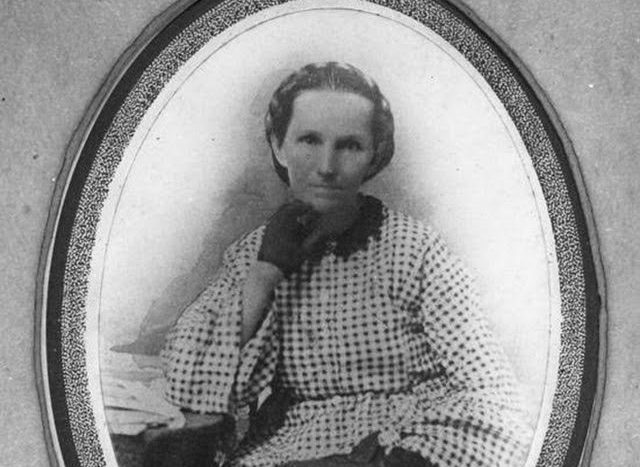
Photo Credit Public Domain via Wikimedia Commons, Source Unknown
Margaret Borland was as tough as they come by the time she turned 12. Born in New York to Irish immigrants, she and her family immigrated to Texas when she was five. The family settled near San Patricio, where they became successful ranchers. That version of the Texas success story ended when the Mexican army attacked in 1835, killing Margaret’s father. Mom and the rest of the family retreated to Goliad, of all places. As the children only spoke Spanish, they were saved from the massacre. Still, the death Margaret saw by age 12 was more than any 12-year-old should face. It was just a beginning.
After the revolution, the family returned to San Patricio and reclaimed their property. Margaret married at age 19 and had a child. Right after the birth, her husband died in a duel. She remarried in 1845 and lost her second husband to cholera, as well as the death of an infant child. Her third marriage was to Alexander Borland, a wealthy rancher from Victoria. The combination of Alexander’s and Margaret’s holdings created one of the largest ranches in South Texas. Tragically, the yellow fever epidemic of 1867 transferred the entire ranch to her name, as it took the lives of Alexander, four of her seven children, and a grandchild.
Thus, Margaret became a rancher, rather than a “rancher’s wife.” Ranchers are hard, practical people. Margaret was no different. In 1873, when she confirmed that cattle were worth $20.00 more a head in Kansas than in San Antonio, she knew that was where they needed to be sold. So she became a trail boss and drove a herd of more than 1,000 head of cattle up the Chisholm Trail. To be clear, Margaret did not come along for the ride; she was the trail boss.
She was also a widow with three living children and several grandchildren that she took with her. The journey was very Lonesome Dove, with searing heat, freezing rain, fearsome river crossings, and the threat of Indian attacks. She completed the journey to Wichita, Kansas, to much local acclaim on June 4, 1873. She is the only known woman to lead a cattle drive without assistance from her husband. It was a staggering achievement.
Diseases and disasters shadowed Margaret’s entire life, and they caught up with her in Wichita. She contracted a sickness known as “trail Fever,” a form of consumption. Margaret died a month later at the age of 49. If we have to explain why Margaret Borland is on a list of the toughest women, you need a deeper understanding of what toughness entails.
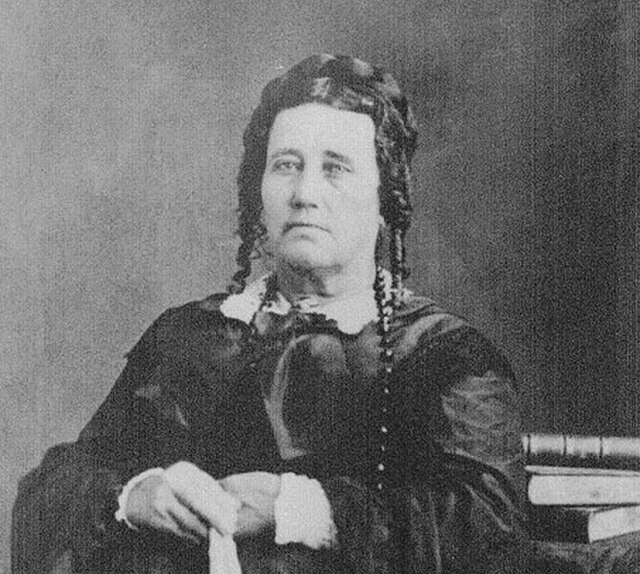
Photo Credit Public Domain via Wikimedia Commons, Source Unknown
Susanna Dickinson is a name many Texans know, and many forget. Here is the refresher course. Born in Tennessee, married at age 15, and emigrated to Texas at age 17. She was at Gonzalez and likely witnessed the “come and take it” battle. Followed her husband to San Antonio. She and the couple’s daughter were at the Alamo when it fell, so she immediately knew of her husband’s death.
Santa Anna interviewed her as a survivor. He gave her a “Note of Warning” to take to Sam Houston. With a group including Travis’s freed slave Joe, Deaf Smith, and Henry Karnes, they found Houston in Gonzales. Susanna likely followed Houston’s army during its retreat. He landed in what is now Harris County.
Destitute, she married a cruel abuser and quickly petitioned for divorce, which was granted as one of the first divorces in Harris County. She or her daughter received over 2,500 acres of land in compensation for her first husband’s military service. Their financial situation forced them to sell the award. She married three more times. The first died, the second ended in another ugly divorce. The third (fifth overall) stuck. Her last husband, Joseph Hanning, was a prosperous Austin cabinet maker and storekeeper. Perhaps the last marriage endured because she had found God. Rufus Burleson baptized her in 1849 after seeing and praising her work during a cholera epidemic. Susanna died of illness in 1883. The home she shared with Hanning is a museum in Austin.
So why is Susanna Dickinson so high on this list? She is famous, having been at the most significant event in Texas History and having rubbed elbows with all the important people. But what did she do, other than endure? Where are the heroics?
The answer: Endurance is enough. At what point would you or I quit? When your husband asks you to leave your family at age 15? When he dies a bloody death in front of you? When the cruelest of generals selects you as his messenger of death? When you see the probability that hundreds more young men will die like your husband? When your finances land you in the grip of an abuser? When your next husband dies?
Susanna Dickinson’s story is the true story of the frontier woman. There were thousands of them, where suffering was a near constant. And yet, they had the courage to live one more day. Susanna finally found a measure of comfort and repose with Hanning. We are happy for that.
Photo Credit Public Domain via Wikimedia Commons, Source Unknown
We all revere our mothers, so this list could only end with “The Mother of Texas.” Jane Long surely earned the title.
She began life as a Mississippi heiress and married an adventurer named James Long. Long was “Filibuster” dedicated to creating an independent Texas. He sailed with Jane, a child, and a small company of men to Bolivar, near Galveston, to realize his dream. The feared pirate Jean Laffite was just then evacuating the area at the gentle nudging of the U.S. government. The legend is that Jane tried but failed to convince Laffite to finance her husband’s plans.
As if dining with Laffite was not enough, Jane Long’s legend begins on Bolivar Island in the winter of 1821-1822. When Laffite did not come through. In September, James Long left Bolivar with most of his troops to raise capital. He told Jane to stay at Bolivar under all circumstances, that he would return for her. When James left, there were a few troops, and at least two other families to stay with Jane, their child, and a slave. The winter was brutal, the Karankawa Indians were a threat, and living conditions were awful. Gradually, the other party members left.
Jane, however, was a stand-by-your-man type of lady. She was also very pregnant. On December 21, 1821, Jane Long, accompanied by only her child and a slave, gave birth to her third daughter (the Longs had a child die in infancy in Mississippi). She incorrectly claimed that this was the first Anglo child born in Texas. It is one reason for her Mother of Texas moniker.
It turned out that James Long was already dead. The Spanish captured him, and he died while a captive, apparently accidentally. Jane Long returned to Mississippi, where Mary, the daughter born at Bolivar, died of illness. Jane returned with her sister and brother-in-law in 1824. She received a league of land from Stephen F. Austin in what are now Fort Bend and Waller counties. She preferred, however, to stay in San Felipe at Austin’s headquarters. Jane returned once more to Mississippi in 1830 to take her oldest and sole surviving daughter to school.
The second chapter of Jane Long’s role in the fight for Texas Independence resumed when she once more traveled back to her adopted homeland in 1832. This time, she went to Brazoria and purchased a boarding house. She owned the boarding house through the revolution.
The boarding house became a focal point of the independence movement. At Austin’s request, Long entertained Mexican and Spanish officials at the hotel while he attempted to negotiate “independent statehood” for Texas. When Austin arrived back in Texas after being jailed in Mexico, he returned to a ball hosted at the boarding house in 1835. Allegedly, it was at that ball that Austin first called for a complete break from Mexico.
Long often stored weapons and papers for the revolutionary leaders. She had to flee with everyone else when the runaway scrape came to town, but she salvaged the papers of Mirabeau B. Lamar and several other fighters. After the Battle of San Jacinto and the establishment of the Texas National Government, she hosted Sam Houston and the members of the original Congress in a victory ball in October 1836.
Long later moved her operations to Richmond. She died in 1880, still a widow. There are tales that Sam Houston, Stephen F. Austin, and Mirabeau B. Lamar all courted her, but failed to convince her. The source of many of these tales is Long herself, who sat for lengthy interviews with Lamar as he compiled his history of Texas.
Whether embellished a little or a lot, Jane Long’s story is remarkable. Giving birth on the deserted island should be enough to qualify her as “tough.” Her tenacity in helping to cement her husband’s vision of a free Texas cements the deal.
We love our list and stand by it. But that is just us. If we missed something or misranked it, let us know. 

 Or info@texasten.com


