


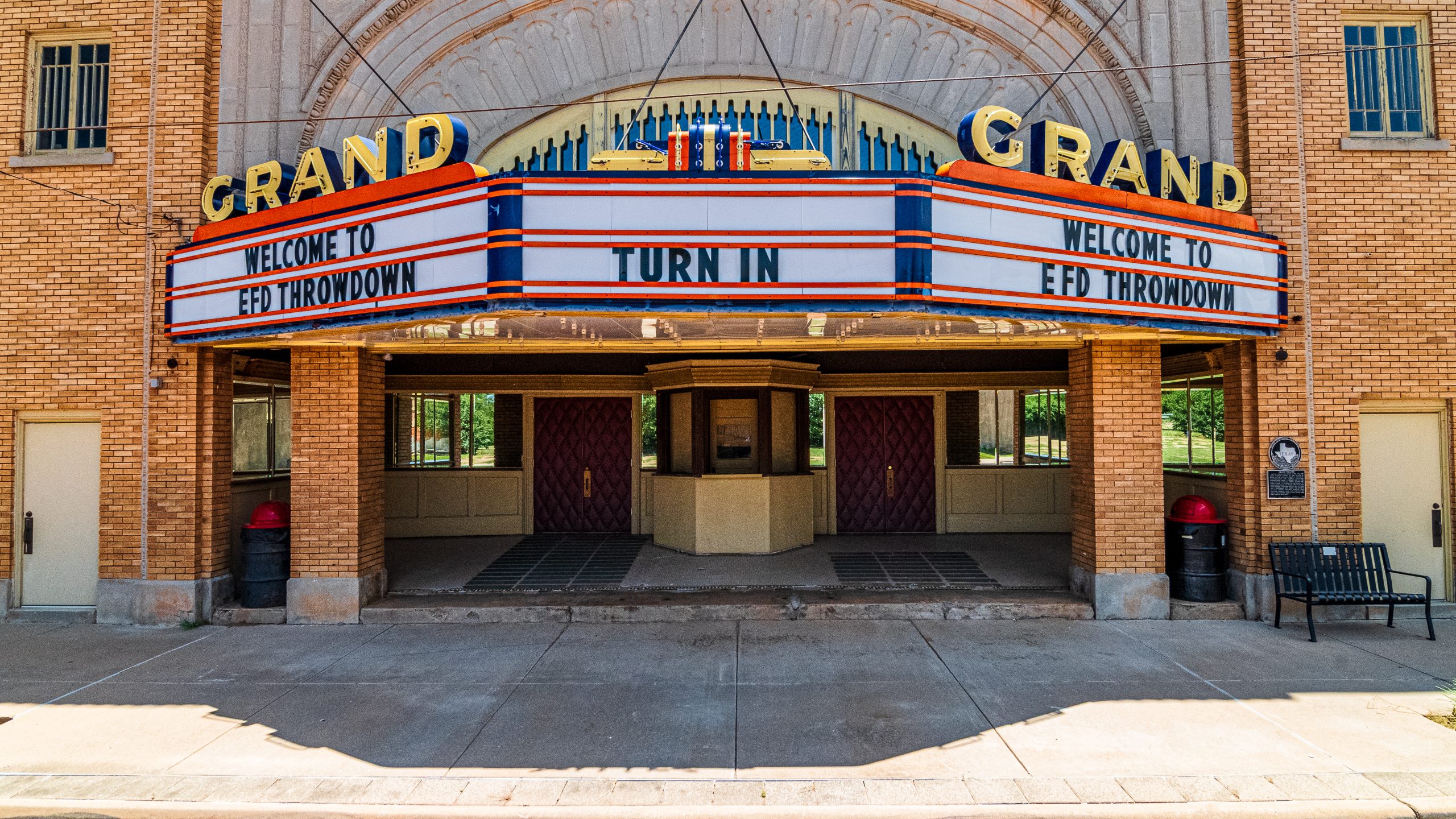
HALFWAY BETWEEN LIFE AND ART
The French New Wave director Jean-Luc Godard was never big in Texas, but he perfectly described the movie experience when he said “Cinema is halfway between life and art.” We all need to escape life sometimes, but going in a group or at least with someone is much better. Theaters connected us to the bigger world and the person in the next seat in a way almost nothing else can. For these reasons, theaters became the hub for town life in the evening and on weekends for generations.
We wax poetic because that last sentence is in the past tense. The 80-inch screen in our living room and the small screen in our pocket have done their damage to local movie houses. To our mind, the world is worse for it. As we traveled across Texas, we made a point to check in on the local cinema. Many have transformed into playhouses, bars, or multiple-tenant retail locations. Others gamely show first-run movies. Some sit empty and crumbling, while others are the focal point of restoration efforts.
Every one of them tells a story as rich as the films people used to flock to see. While every theater was important to us, the best stories made theaters memorable. So our completely arbitrary Top Ten focuses on an ethereal combination of history, architecture, and nostalgia. We intentionally excluded the grandest theaters (Think of the Majestic in San Antonio or the Paramount in Abilene) as more like opera houses than film houses. They will get their due later.
With those attributes as our criteria and in reverse order, here are our favorite Texas Theaters, followed by some honorable mentions:
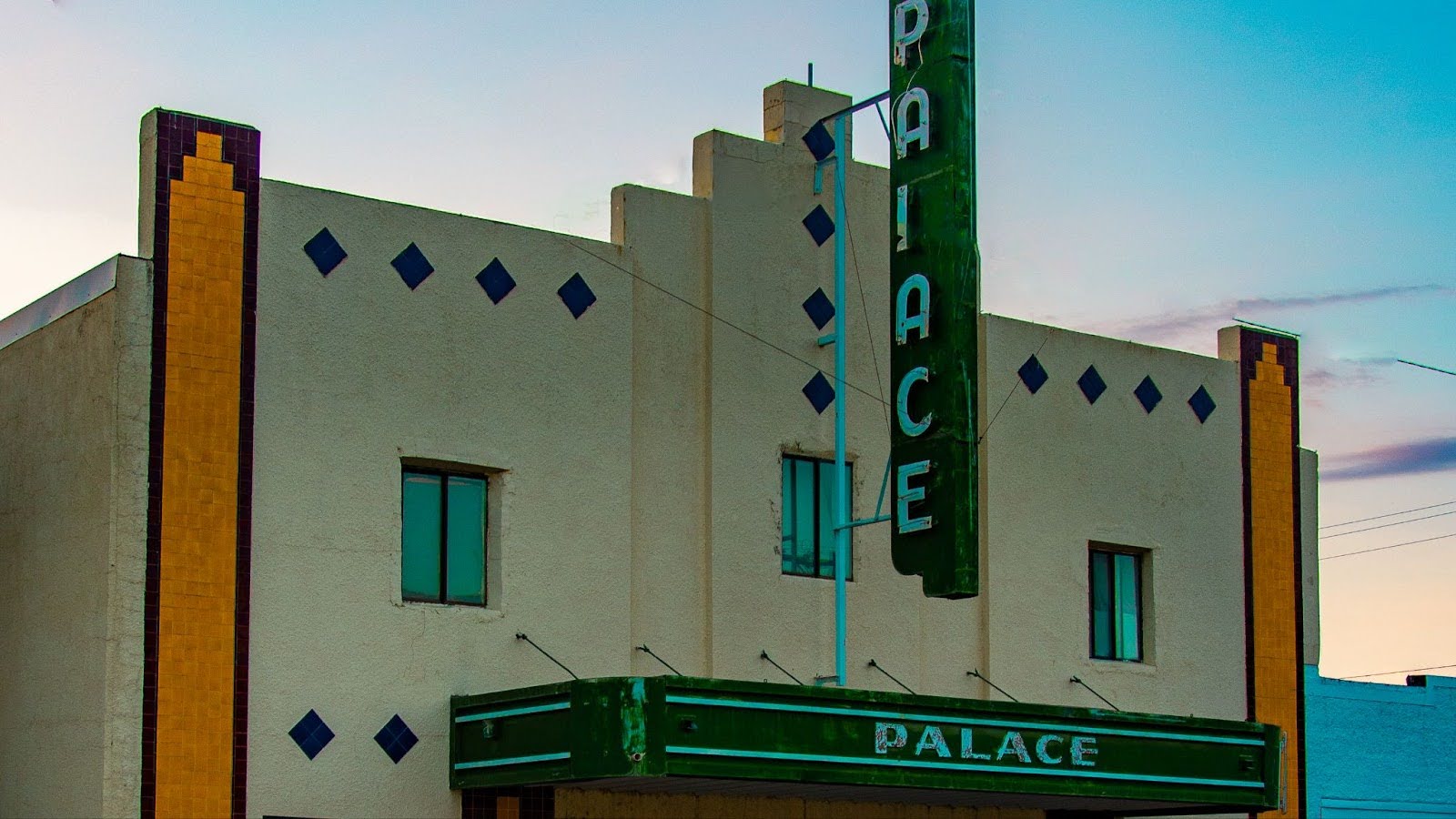
If you want movie history, it gets no bigger than the Palace Theater in Marfa. Giant is the essential Texas story of ranching, oil, ambition, liquor, and prejudice. Hollywood came to Texas to film Giant, particularly Marfa and its surroundings. They showed daily rushes of the filming in the Palace that anyone could watch. Later, the teenagers who met James Dean during the filming watched and mourned him through that same screen. Kirby Warnock brilliantly tells the whole story in his documentary Return to Giant.
The only thing we cannot figure out is why the hippest city in West Texas has not figured out a way to revive the Palace. Someone with Jett Rink money needs to do that.
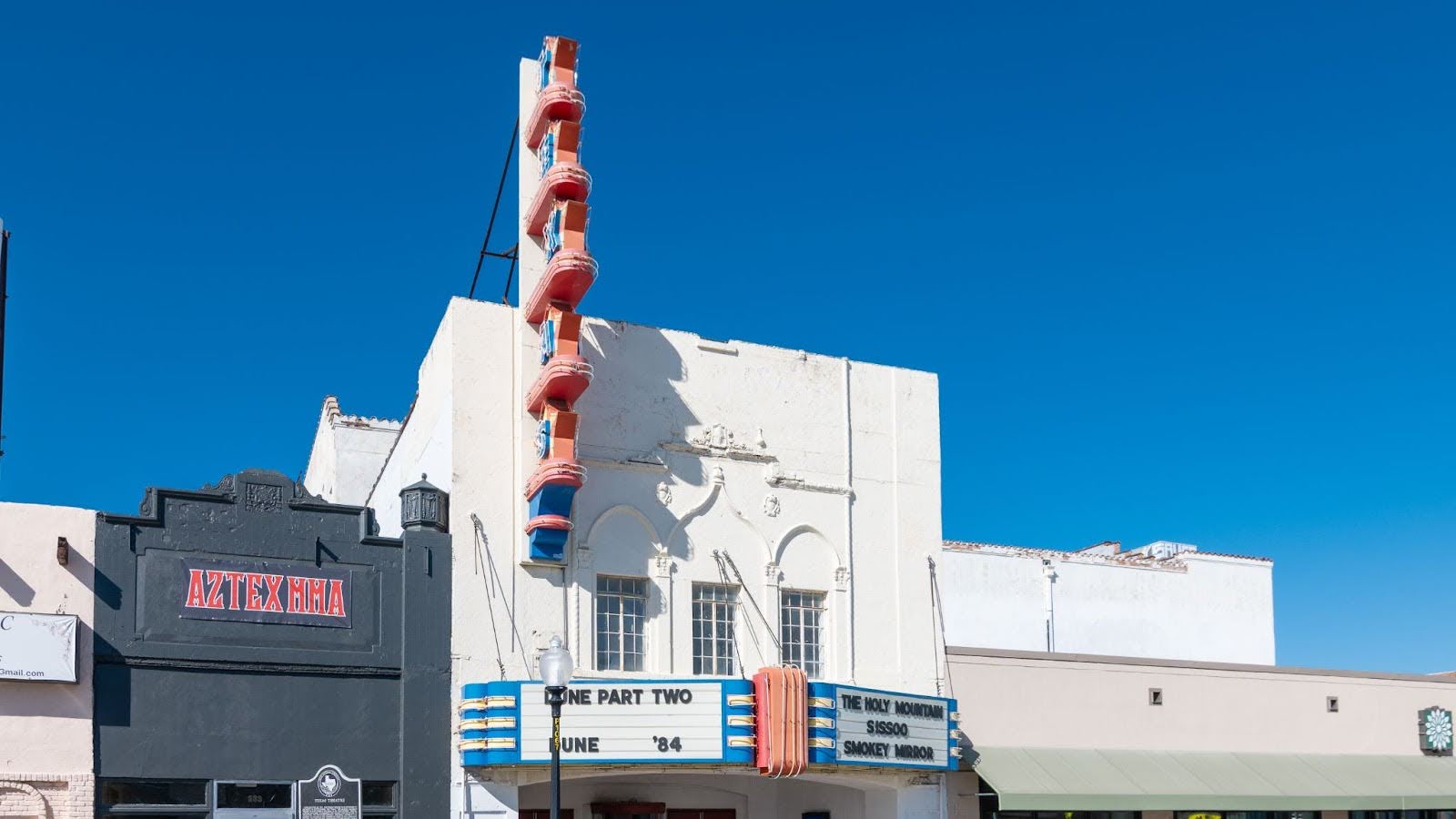
History of a bigger sort came to the Texas Theater on November 22, 1963, when Lee Harvey Oswald used the theater as a hideaway. To no avail, Dallas police captured him right outside, but only after he killed Dallas policeman J.D. Tippitt. The Texas was already famous, once owned by Howard Hughes, and offering the first air-conditioned Dallas theater. Oswald’s capture, however, transformed fame into notoriety. The owners engineered a massive redesign to obscure the building’s dark past.
Like many others, the Theater fell from favor and suffered abandonment. For decades, it teetered on the edge of possible demolition. The Texas returned to its formal elegance through the work of a local preservationist and then a community non-profit. A recent renovation included a technical overhaul. Today, Texas is once again the heart of Oak Cliff, often screening independent movies. It is probably the theater where Jean-Luc Godard would feel most at home.
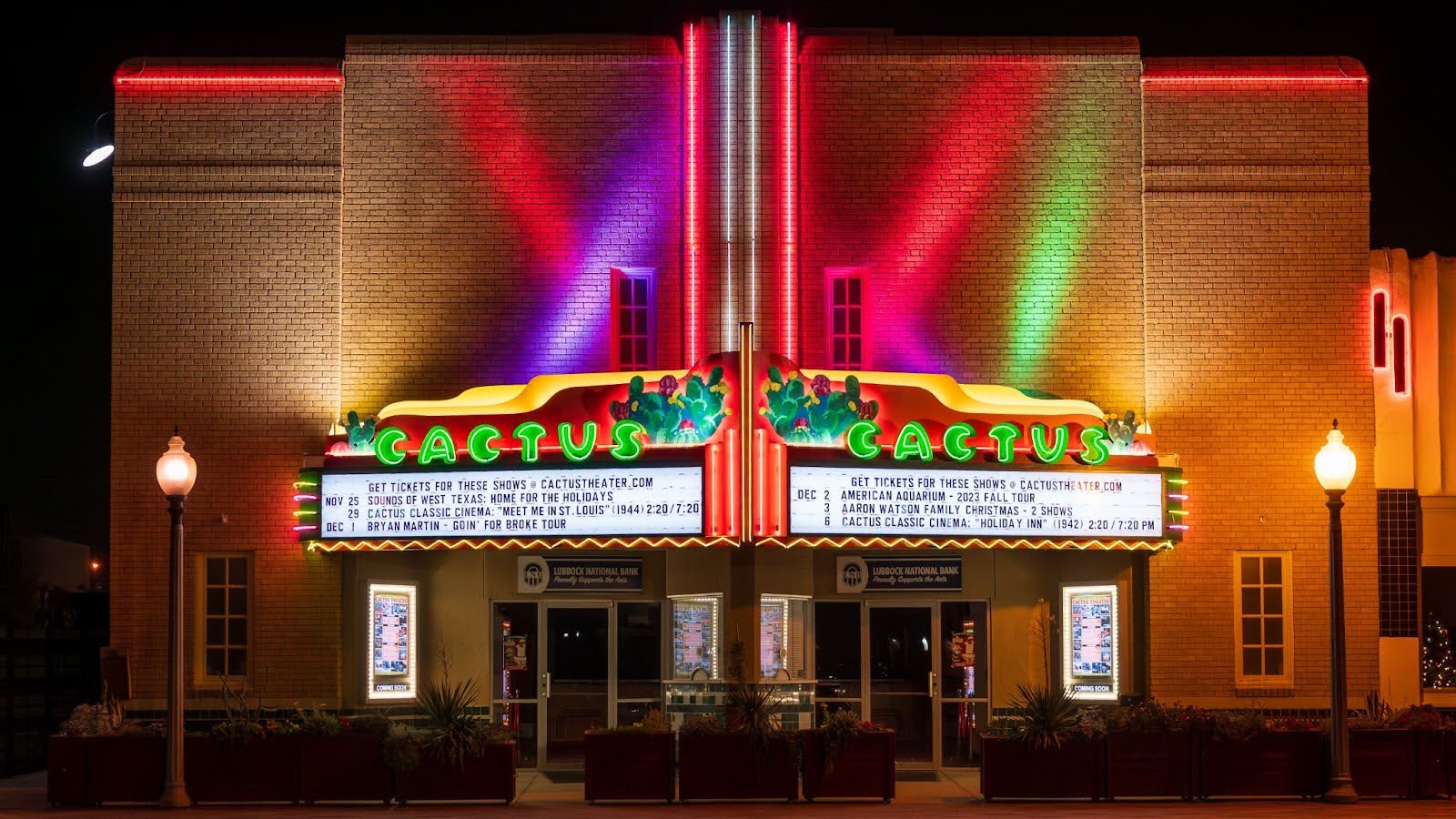
Buddy Holly went to the movies here, and the street in front of the theater is now Buddy Holly Way. Today, the theater primarily presents shows rather than films. Ironically, the Crickets performed at the Cactus after it reopened in the 1990s.
We love the Cactus because of its expert renovation. Whoever did the outside lighting deserves a medal. Lubbock rarely evokes thoughts of glamor, but the Cactus is a red carpet ride. Just maybe you will catch the current generation’s Buddy Holly performing there on their way to stardom.
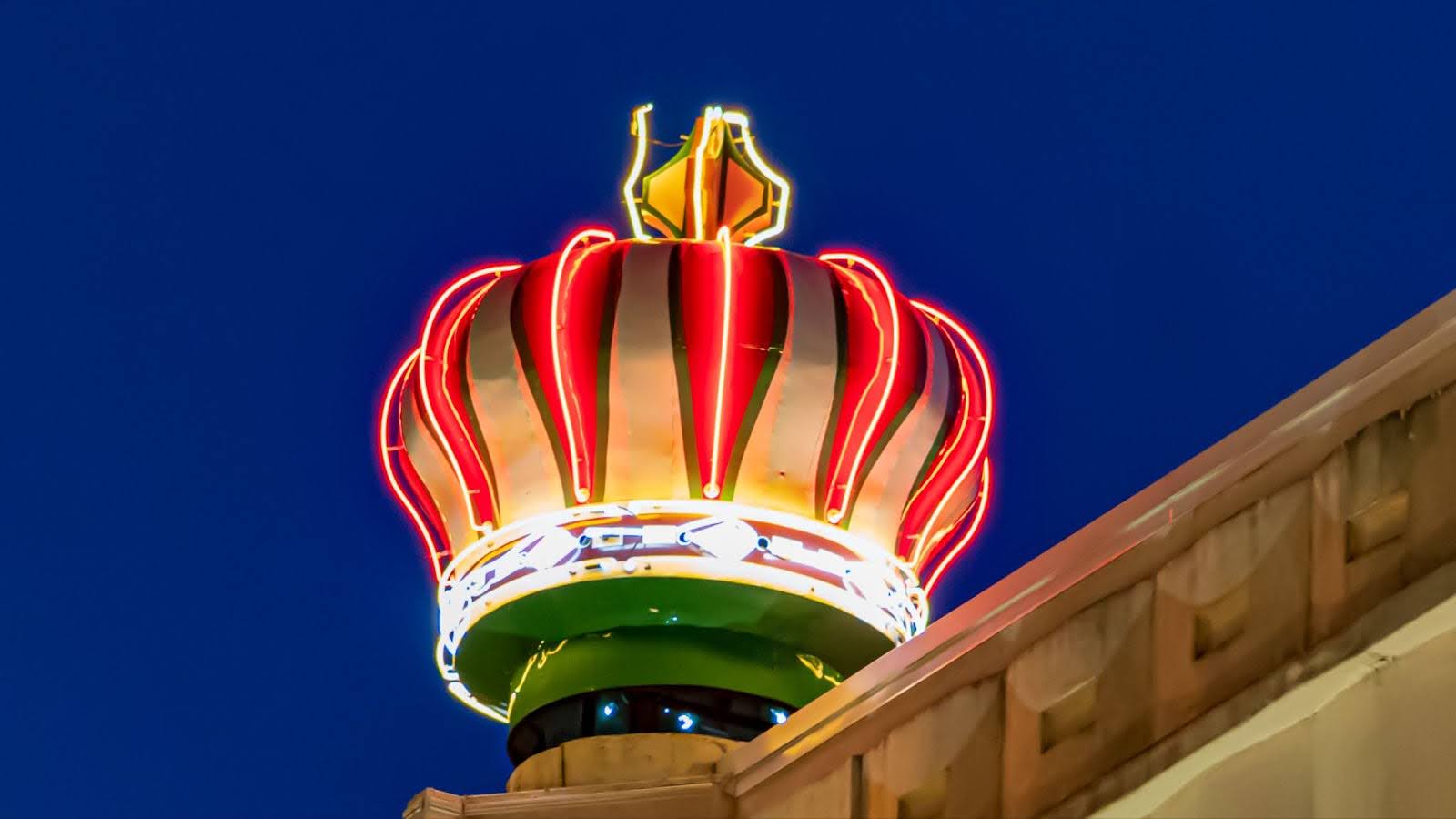
History? The Queen in Bryan dates back to 1885. Not many movie theaters predate “the talkies,” let alone movies altogether. A major 1939 renovation transformed the Queen into an Art Deco beauty, but by the 1970s, it could not compete. Over three decades took a severe toll, so by 2010, one would have considered the Queen a lost cause.
However, Bryan citizens have remade their downtown, and the Queen sits at the center of it all. We visited on one of Bryan’s “First Fridays.” Vendors and patrons packed the area. The lighting of the Queen and her striking crown cast a pleasant glow over the proceedings. There is a hip bar inside. The good news is that the Queen is again showing first-run movies. Everyone was having a whale of a time, and this beautiful piece of art and history was a big reason why.
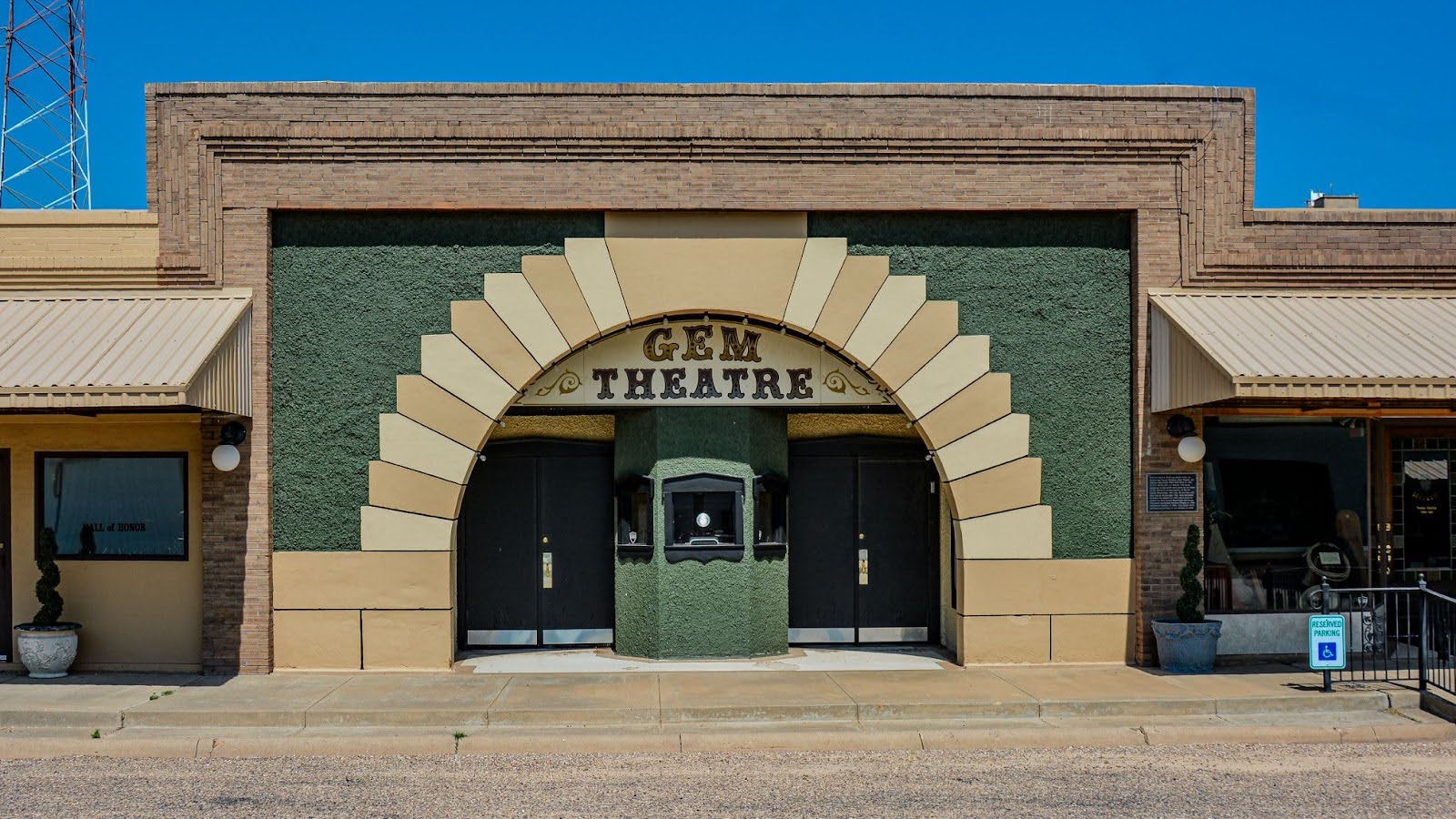
Has there ever been a cooler human being than Paul Newman? No, just no. Many stars start young and beautiful, but Paul carried that smoking hot look and quiet confidence for over eight decades. In the early 1960s, Paul brought his swagger to the unlikeliest of places: Claude, Texas, east of Amarillo. He was already a superstar, having garnered Best Actor nominations for Cat on a Hot Tin Roof and The Hustler.
Newman’s stay in Claude earned him the third of nine nominations for his work in Hud, the film adaptation of Larry McMurtry’s first novel, Horseman, Pass By. It would not be until his ninth try that Newman walked away with the statue for The Color of Money, but there is no accounting for taste. Patricia Neal won the Best Actress Award, and Melvyn Douglas took home Best Supporting Actor. The film also earned a golden statue for best black and white cinematography in a nod to bleakness. Trust us, Claude is prettier than the movie made it look. The movie uses the theater for a scene without Newman, but we have a film record of the most significant Hollywood royalty in Claude, Texas.
HUD was not the first film shot in and around Claude. That honor goes to famed Texas rancher Charles Goodnight, who produced the silent film Old Texas. When the Goodnight movie played, the theater was only a year old and was named the Claudia. Today, the Gem is a museum, which is appropriate given the amount of history.
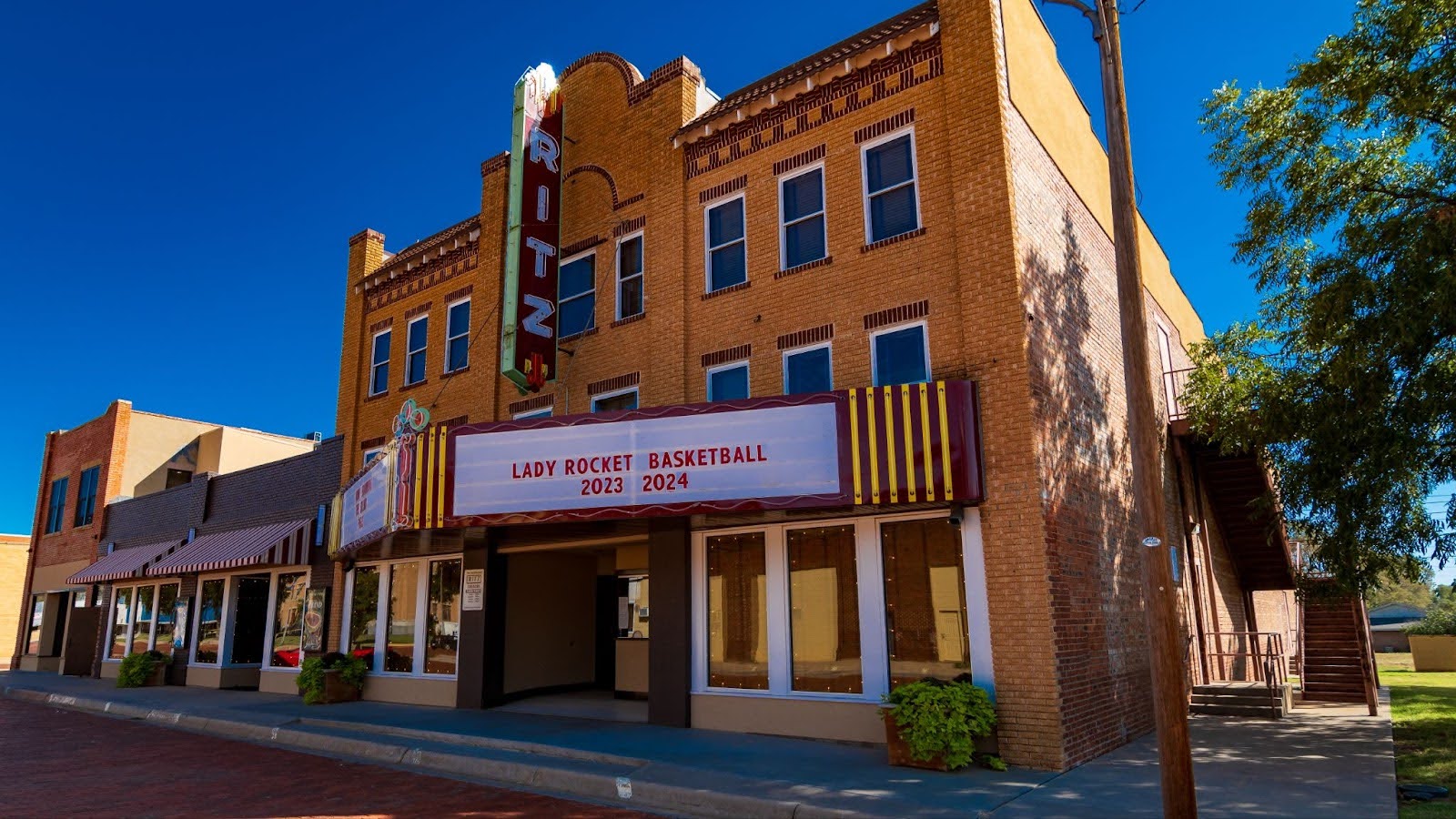
Several excellent restorations mark our list, but none better than what happened at the Ritz in Wellington. Bonus points for the juxtaposition of name and location. Like others, the Ritz sat vacant for more than a quarter-century. Unlike others, no major population center is anywhere close to Wellington, Texas (Amarillo is just over 100 miles to the northwest).
Historic Wellington, however, designed a redo that allows for live shows and films. The theater’s vitality results from its ability to draw audiences from several surrounding counties. The Ritz is one of the few working examples of the original small-town theater, where a community gathers. Bravo!
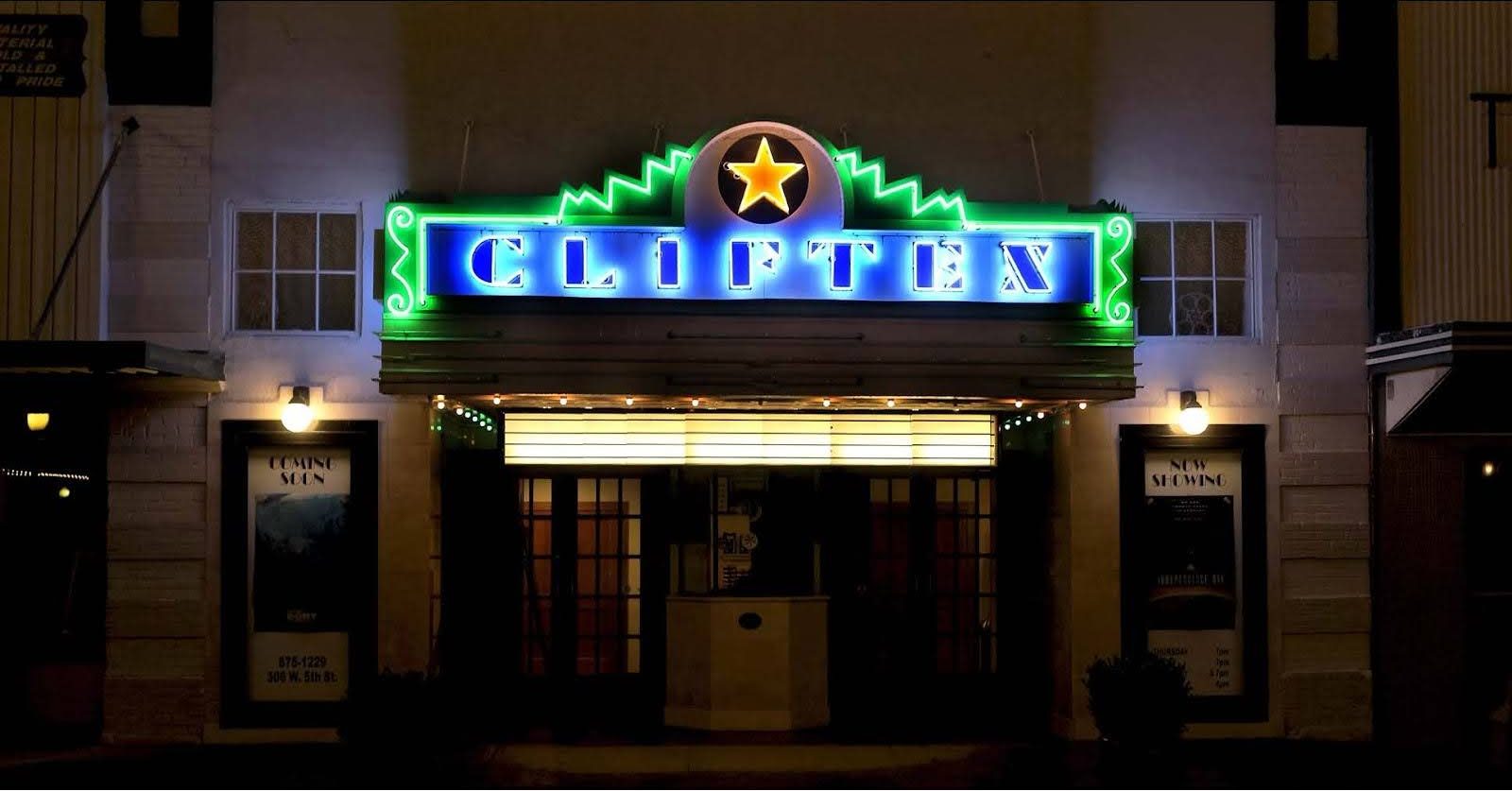
The ClifTex is small but a perfect jewel of a theater. Clifton sits on State Hwy 6 about 40 miles west of Waco. The road is heavily traveled, so Clifton has an active downtown. Enough that ClifTex is mostly a first-run film location.
What we love about the ClifTex is its intimacy. If there was ever a place where grandparents could take their grandchildren to that simultaneously recalls the past for the elders and promises the future for the younger set, the Ciftex is it. If you live around Waco, do that before the yongsters get their first phone.
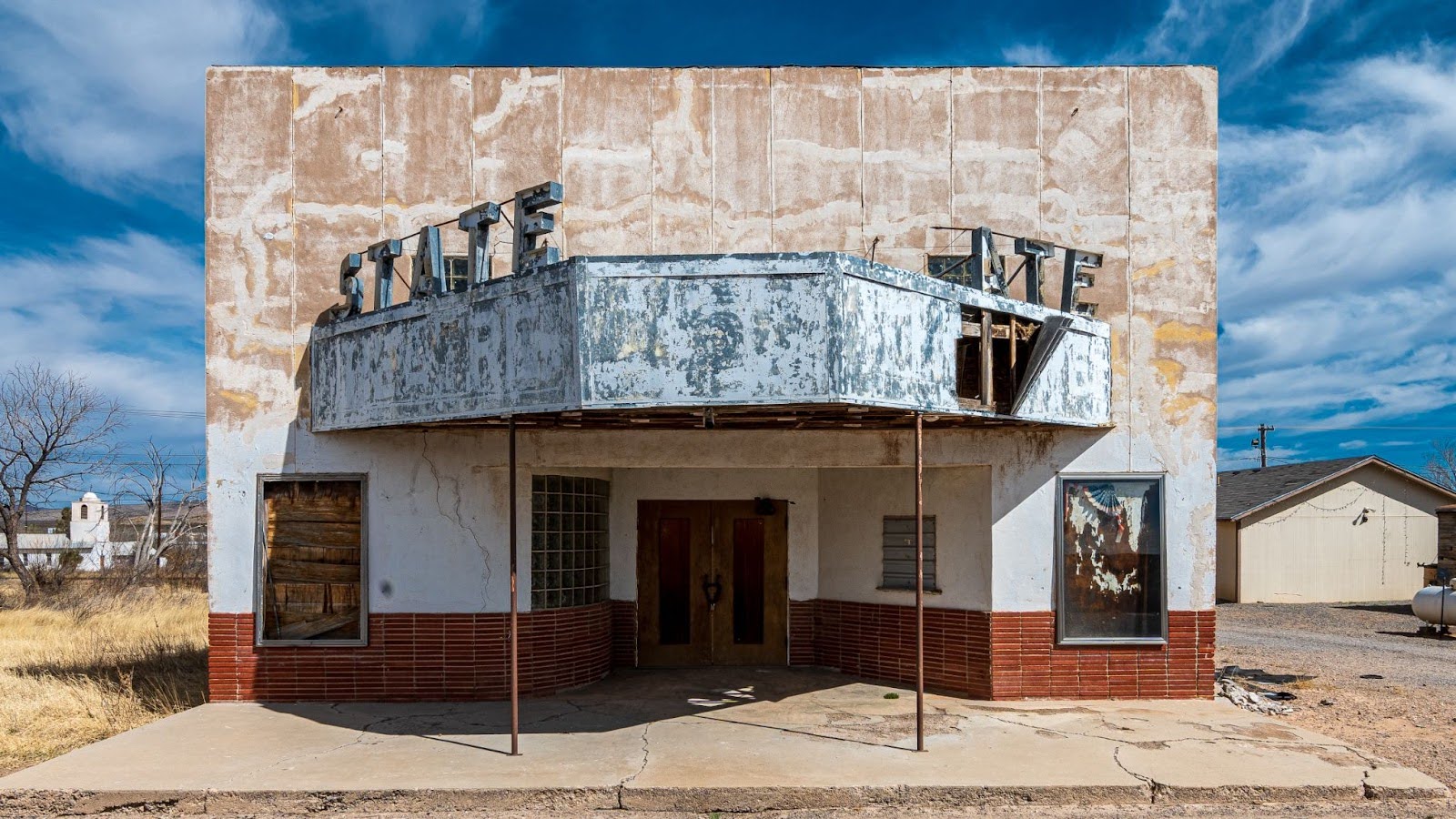
We obviously love theaters based on what they mean to a community. At the same time, abandoned theaters say something about how difficult it is to maintain a sense of community in a world of changing technology and priorities. The State says more about those struggles than any theater we found.
The exterior is aged, but reasonably well preserved considering it has not operated since the mid-1980s. Reportedly, the interior is in even better shape. Sierra Blanca is too far from El Paso to be a suburb, not big enough to be a rural center, and seems to be barely hanging on. Yet, the State allows one to visualize a time not too long ago when high school kids escaped on a date, youngsters saw worlds that they dreamt about that night, and ranch families got two hours of respite from heat and labor.
Not to be too dramatic, but in its present condition, the State is an almost perfect symbol of the cruelty of unfulfilled promises. Films tap into those sorts of emotions, particularly in places that are more romantically named than they could ever be in reality. Ultimately, the State ranks highly on our list because it is nostalgic, wistful, and the best place to see what happens after The Last Picture Show.
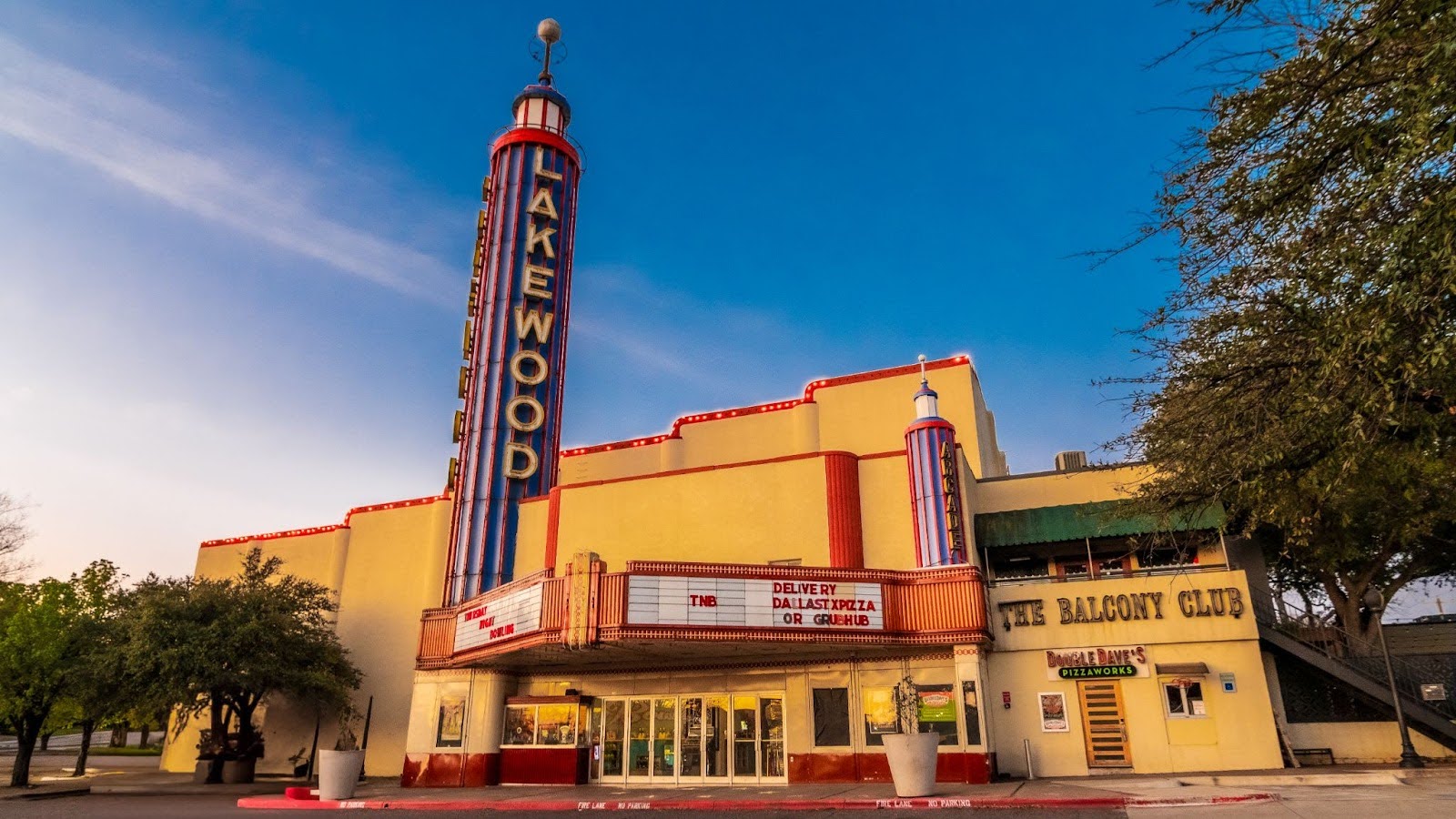
It is all about the architecture here. The tower is striking, and the exterior tells you something grand is happening—1950s sophistication in all its glory. Dallas is a city of millions, and Lakewood is an affluent, arts-loving neighborhood. The theater tells you all that.
And yet, it is a facade. Inside is a bowling alley and a chain pizza joint. We have nothing against bowling alleys. But it is inconceivable that something that looks as good as the Lakewood is not an actual theater. The preserved exterior look brings back elegance and a time when movies were important enough to everyone for a night out. Its present use might be a metaphor for the surrounding city, where elegance is prized but never quite the whole story.
We like that the poster frames feature The Big Lebowski. It gives us hope that The Lakewood will one day reclaim its destiny as the hippest, grandest theater in the state.
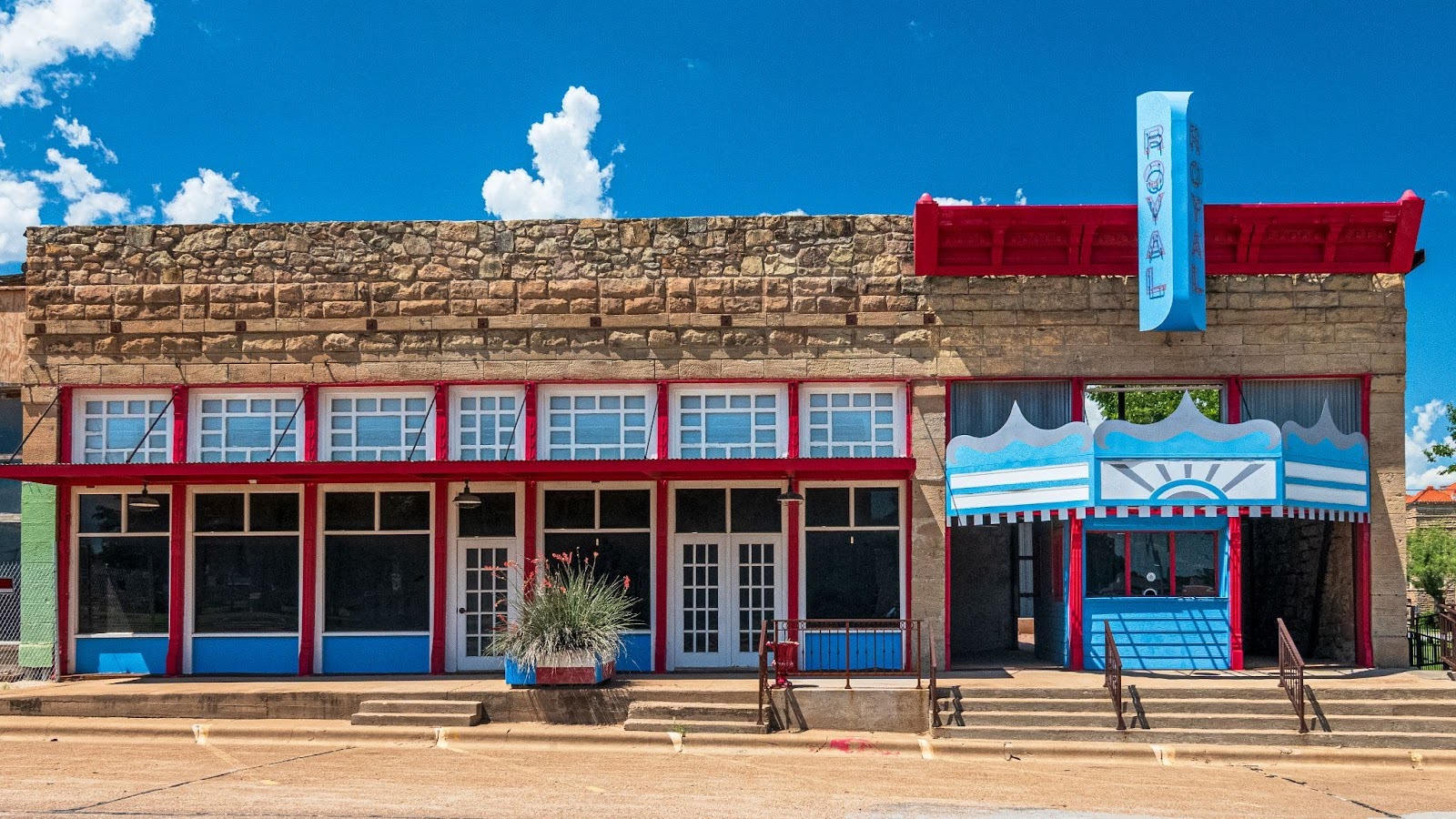
It had to be. The Royal in Archer City is the most famous theater in Texas, courtesy of native son Larry McMurtry’s The Last Picture Show. McMurtry set the book in the 1950s, but it was about the 1960s, and Bogdanovich made the film in the early 1970s. The story, however, is as true now as it was then. Texas is changing, and we are not ready for that change.
Texans love what Texas was, or at least what we pretend it was. Most of us, however, have no interest in living the life that “Old Texas” required of its citizens. By absolute numbers, Texas has the most people living in rural areas; more than 4,000,000 as of the last census. That accounts for only 16% of the total population. When McMurtry wrote the book, almost 30% of Texas was rural.
The Royal Theater’s closing presaged this transformation. Its preservation and honoring mean we hold onto our romantic and mostly fabricated conception of ourselves. Movies are about suspension of disbelief, and there can be no finer example than the Royal Theater.
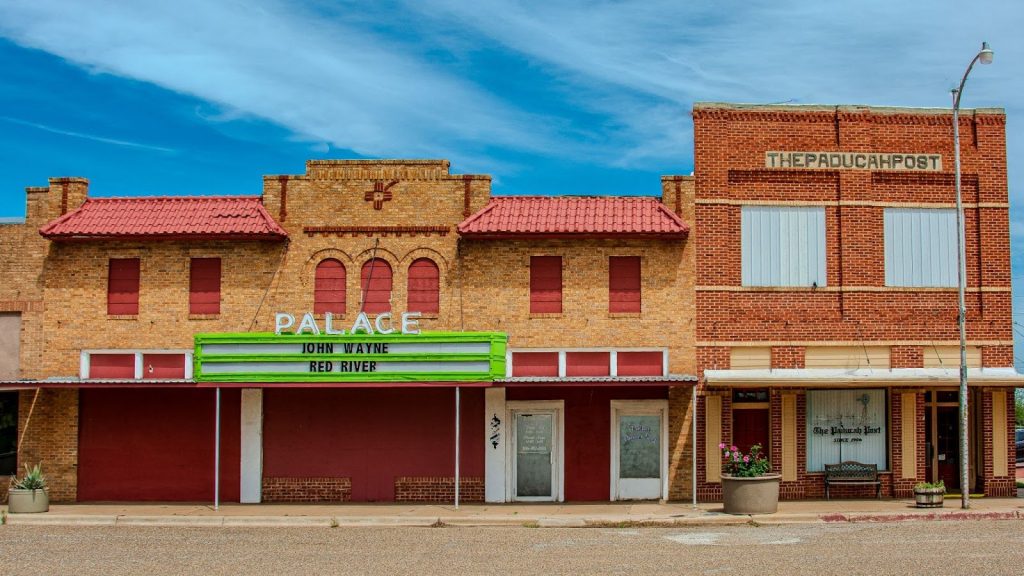
So, the Royal makes sense, but why the Palace in Paducah? This Palace has also long been closed. But the actual “Last Picture” at the Royal was John Wayne’s Red River. We love the wink the Palace gives the story by still listing Red River as the current feature. We Texans do not give up on ourselves.
We love our list and stand by it. But that is just us. If we missed something or misranked it, let us know. 

 Or info@texasten.com


