


THE BEST PEOPLE
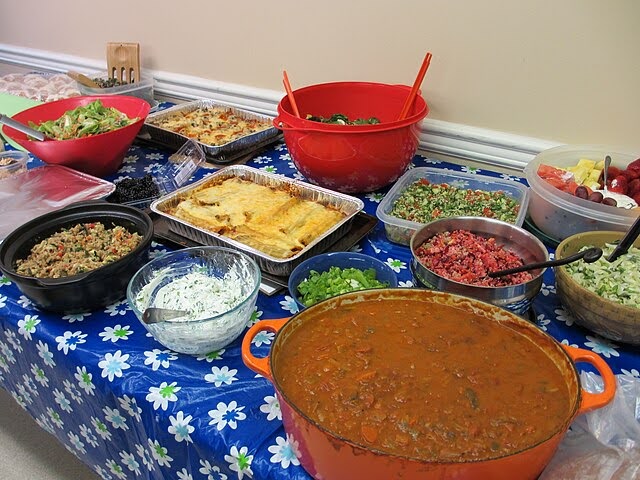
My favorite Jerry Jeff song is Sangria Wine. The tune is catchy enough to be an earworm for me, but the real attraction is the story. Friends having a good time on a Saturday night, sharing traditional food and drink–as Jerry Jeff sang, that’s “how it usually goes.” We are not alone in this thought, but Texans, more than most, believe food is better when it is shared.
When M’Lissa and I sat down to list our favorite Texas food dishes, we applied the Jerry Jeff metric. How well would a dish play at a gathering? It might be a church potluck social, or it could be Saturday night on the patio. Either way, the food would need to be comfortable for a group.
It turns out that the formulation we chose has some implied support in foodie circles. No one other than the great chef Julia Child once remarked that “People who love to eat are always the best people.” I was glad to hear that–it raised my self-esteem as well as my evaluation of friends and family. With no other credentials other than being members of the tribe of food-loving best people, here is our list.
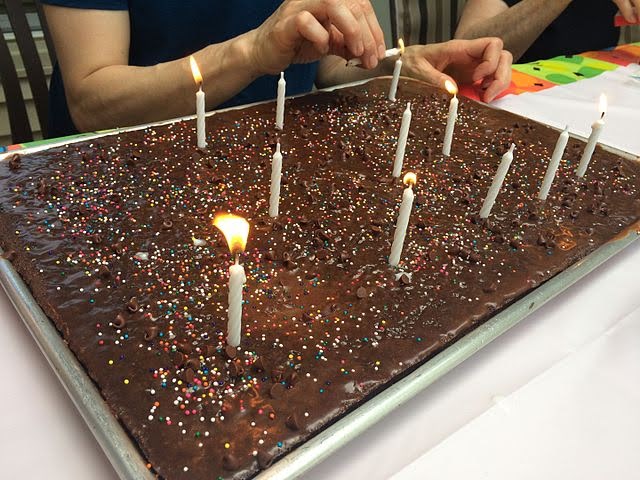
Photo Public Domain via Wikimedia Commons
Both the origins and the reason it is called Texas Sheet Cake have thus far eluded investigative efforts. The “sheet” portion of it seems plain enough, as the single-layer, large flat shape of the cake suggests a sheet. And it is decidedly a cake, although now and then the uninformed will try to stick a brownie label on it. Brownies exist in a netherworld between cookies and cake, but generally speaking, to be a brownie, you have to be dense. Sheet cake done right retains the fluffiness of a cake, but it is just in a lesser quantity, given the lack of height.
So, the real question is, “Why Texas?” The first answer is, of course, “why not?” Texas is the second-most populous state in the nation. Californians are busy with their Brie. So it is a good bet that we eat more sheet cake than anywhere else. We also excel at making unverifiable claims. Additionally, one of the defining characteristics of a sheet cake is its large size, which matches up. Finally, the pecan, the Texas’ state nut, is the most common sheet cake topping.
Yes, it is a Texas dish. Sheet cakes bake quickly, store well, and are easily cut at a potluck. Creamy chocolate with a crunchy texture from the pecan, then thoughtfully paired with a Blue Bell varietal? Heaven on earth.
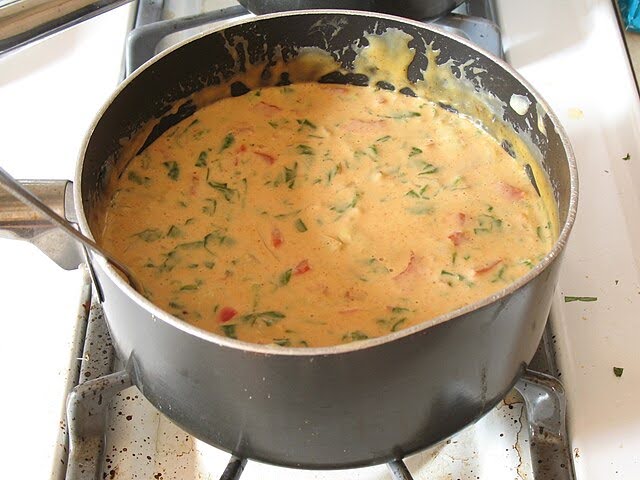
Photo Public Domain via Wikimedia Commons
My daughter once thought she wanted to attend college out of state. We disagreed. Rather than play the “it’s our pocketbook” card, my wife took a college tour with Kelsey on the Atlantic seaboard. In each college town, they would sample the “Mexican food.” When they reached Clemson, the waitress brought out some melted Velveeta in fulfillment of a Chile Con Queso order. Victory was ours as Kelsey made the sensible decision to attend Baylor.
Chile Con Queso is the ultimate Tex-Mex comfort food; it makes you feel warm inside without being too spicy. The key is achieving the right creamy consistency, balanced against the subtle heat from the peppers. I am partial to the versions that add some ground beef for texture. Those recipes carry the side benefit of being a meal unto themselves. It is not a complicated recipe, but the fine-tuning makes all the difference. Get it right, and people will congregate around the chip bowl.
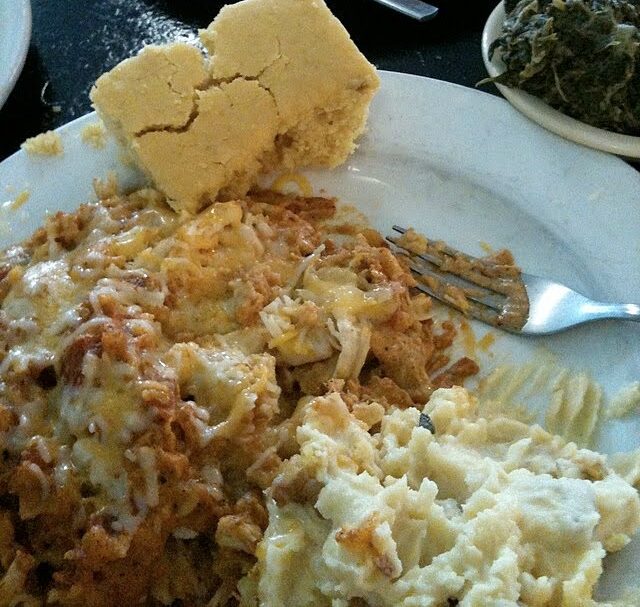
Photo Public Domain via Wikimedia Commons
Texas leads the world in famous ranches, and the King Ranch is the most famous. Part of that fame is due to branding (no pun intended). You can shop at a King Ranch Saddle Shop for ranch-appropriate apparel to wear in your King Ranch Ford F-150. Before all that intentional branding, however, and to this day, if you say “King Ranch,” most Texan minds will immediately go to the chicken-based Tex-Mex dish. The irony is that the family (mostly Klebergs rather than Kings) claims to be mystified by the connection between the name and the dish, because there isn’t one.
No matter, both are iconic, and they ought to fit together. In 1854, Richard King realized that his skills with steamboats did not automatically translate to ranch life. In the course of purchasing a cattle herd in Cruilla, Mexico, he also recruited the vaqueros who had attended the herd for generations. These families became the Los Kinenos (the King’s men), who made the ranch run, and whose descendants remain on the ranch to this day. So Mexican food and the King Ranch share a deep history, predating the origins of Tex-Mex by decades.
Recipes for the dish under the King Ranch name began appearing in the 1940s and ’50s. Many credit the increasing availability of Campbell’s Cream of Mushroom soup for fueling the popularity of the dish. Whatever the reason, the creamy, cheesy, peppery concoction warms many a Texan’s heart and fills their stomach. The chicken tricks me into thinking it can’t be that many calories, a state of willful and blissful ignorance that you will not shake me from, no matter how many calorie counters are in the world.
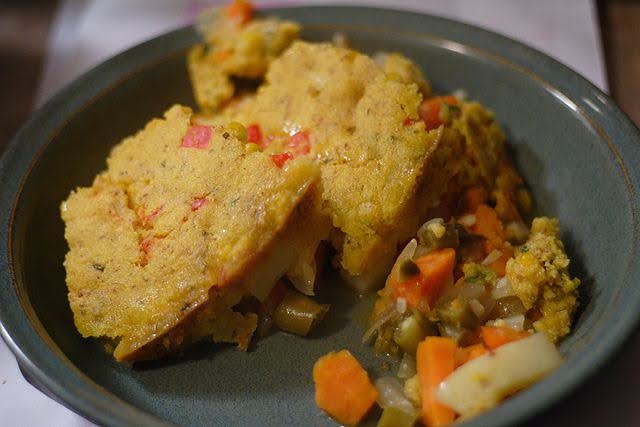
Photo Public Domain via Wikimedia Commons
The enchilada, the taco, and the fajita grab all the glory. But dammit, give me a good tamale and I am a happy man. (Unsolicited thumbs up to the Tamale Compuesta plate at Ninfa’s–my go-to there). For those who have not considered the virtue of the humble tamale, let me point out that, first, the dough that provides the base is made from corn rather than wheat. Corn dough is gluten-free (the tamale as a health food!) with a sweeter flavor. Second, the cooking is done via steaming, so you get all the benefits of retained taste that comes from slower and lower cooking.
As good as tamales are, the absence of any crunchy or meaty textures might detract from your fulfillment. Tamale Pie addresses that flaw by removing the corn husks in favor of chili layers and adding cornbread crust throughout. By turns meaty and soft, with pops of texture. Glorious for a Sunday afternoon when a nap will be preferable to anything else in the world.
Befitting its status as a casserole, Tamale Pie gained prominence early in the 20th century, when methods of preserving food for serving over several days became popular due to food scarcity and economic constraints. That advice remains sound – reheated Tamale pie two days after the event is maybe even better than the first go-round. Tamale Pie is also the optimal way for a president to eat tamales without endangering national security.
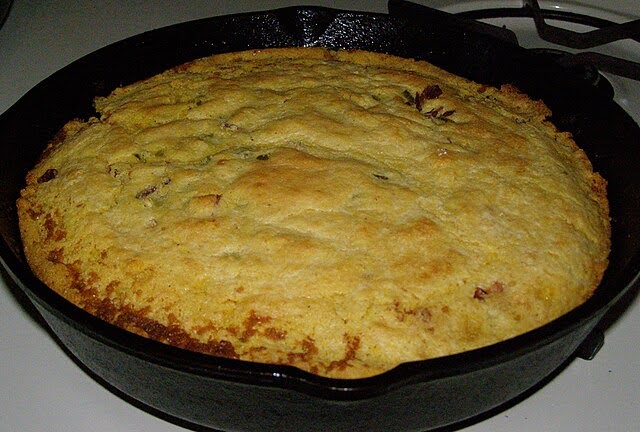
Photo Public Domain via Wikimedia Commons
As Texas is the bastard child of the South and the West, it is about time to give some love to our Southern roots. That can mean Paula Deen, but in the case of cornbread, it starts well before that. Corn was the most important agricultural resource of the Native Americans; unsurprisingly, cornbread originated with them. Their cornmeal was water-based, so while nutritious, it probably would not make Paula’s table.
Europeans wanted taste. They added milk, honey, and/or butter. That was a significant step, but the dish was still essentially just cooked dough. Enter the enslaved community. We know the American version of African cuisine as soul food. Inherent in the cuisine is a history of struggle and the need to feed the soul in the direst of circumstances. Cornbread filled the bill in two ways. The scraps of leftovers that made their way to the slave kitchen were used for additional, often zesty flavoring. The cornbread was then used to provide heft to the thin soups that were usually the main course.
The nutritional value of cornbread in all its forms sustained Native Americans, soldiers in the Revolutionary and Civil Wars, and enslaved and oppressed people. Its usefulness was enormous, and with that came constant improvements to taste.
As Americans became more mobile, cornbread became more widespread, but seasoned to the tastes of different regions. In Texas, our Mexican influence resulted in peppers often being part of the mix. Regardless of your specific heritage, chances are that there is a family restaurant that makes “the best cornbread in the world.” You have many people to thank for that.
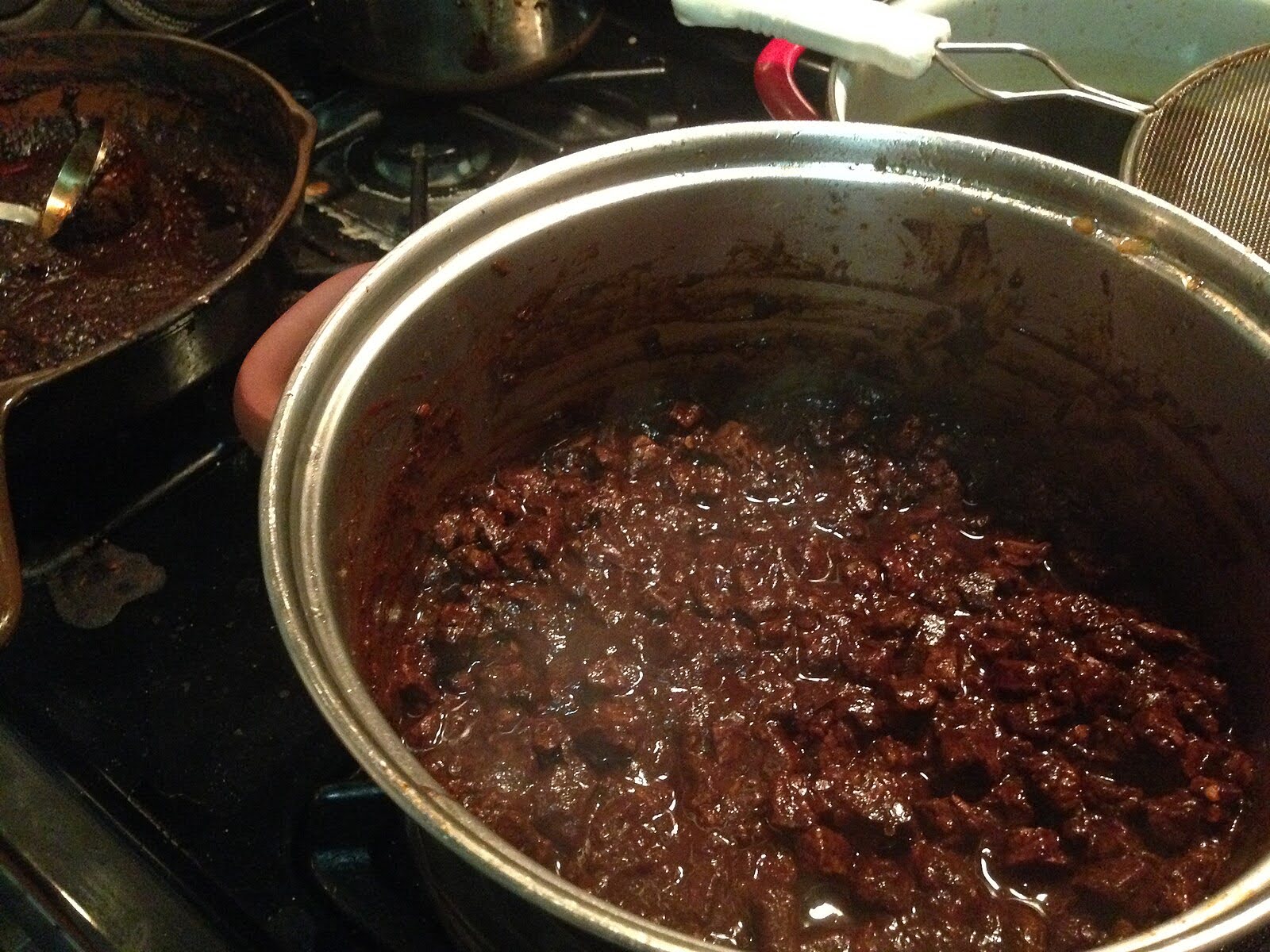
Photo Public Domain via Wikimedia Commons
We thought for a long time about combining 6 & 5 into one dish – chili and cornbread. There is a serious case to be made that the combination would rank even higher than the components separately. The origins of the two dishes, however, are so distinct that combining them would have done a disservice to each element. For instance, chili is so important to Texas cuisine that it has a “definitive” source book: With or Without Beans. Most people know the meaning of the title, which is an eternal debate about chili. And, of course, multiple cookoffs and festivals celebrate the humble stew, the most famous being in Terlingua.
Chili is comfort food, economy food, and a party food. Most of all, it is the official state dish of Texas.
The short course on chili (we are talking about “a bowl of red,” not that other stuff that is found in Cincinnati) is that it originated in the Canary Islands. Immigrants carried the recipe–beef or venison with chili peppers–to San Antonio. The dish grew to local popularity when the “Chili Queens” began selling it on Military Plaza. Important sidenote here-the Chili Queens sold it with beans on the side.
The dish spread, as it was easy for the ubiquitous “Cookie” of every chuckwagon in every Western cattle drive movie ever to make on the trail. In 1893, San Antonio’s booth at the Chicago World Exposition featured chili, and people really, really liked it.
“Chili joints” popped up all over the country. These joints remained popular for decades, offering an economical, filling, and tasty dish. Gradually, however, they faded in favor of “homemade chili.” That term is in quotes because the real boom in chili started in Corsicana with the famed Wolf Brand Chili in cans, and in New Braunfels at the Phoenix Saloon, where Frank Gebhardt popularized the use of chili powder.
Texans have fought the idea that chili is lesser because of its pre-made versions through competitions and festivals celebrating “high-end chili.” The first of these was the 1952 Texas State Fair, where the official rules specified “no beans.” That seems pretty official, but most contests today either have separate categories or leave it up to the cook. Regardless of beans or no beans, a bowl of red is just the thing for a fall day.
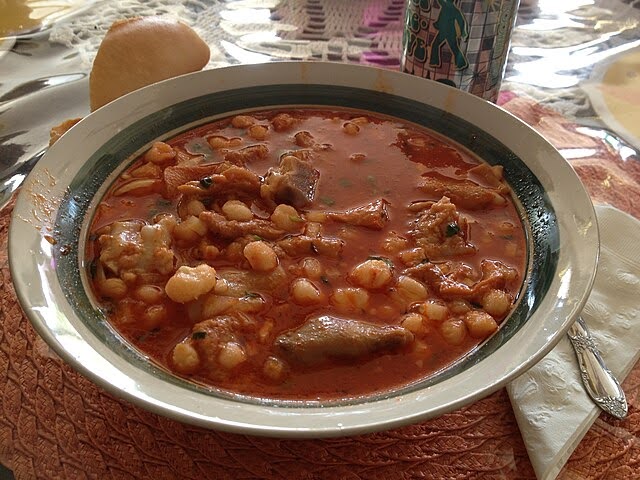
Photo Public Domain via Wikimedia Commons
What other food has sold millions of albums and been featured in an adventure movie… oh wait, that is something different. The menudo we’re talking about is the Mexican version of a Spanish soup, featuring beef tripe (the lining of the cow’s stomach). We surprised ourselves a little ranking Menudo this highly, as we are infrequent eaters of the dish.
The meal’s purpose, however, aligns perfectly with the article’s mission statement. Well-prepared menudo takes time and is typically prepared for weekend family gatherings. While some say menudo is just Mexican chili, the truth is that the elements are much more numerous and complicated. The broth, seasonings, and hominy offer a dizzying variety of combinations. Once finished, the great cooks liberally garnish and serve with tortillas.
Roja menudo is the most popular version. The deep red, hearty flavor is incredibly satisfying. The best menudo is in the backyard, eaten off a card table while sitting in a classic nylon lawn chair, with an alcoholic beverage. The best news is that menudo is famous as a hangover cure. Does not get any better or more efficient than that.
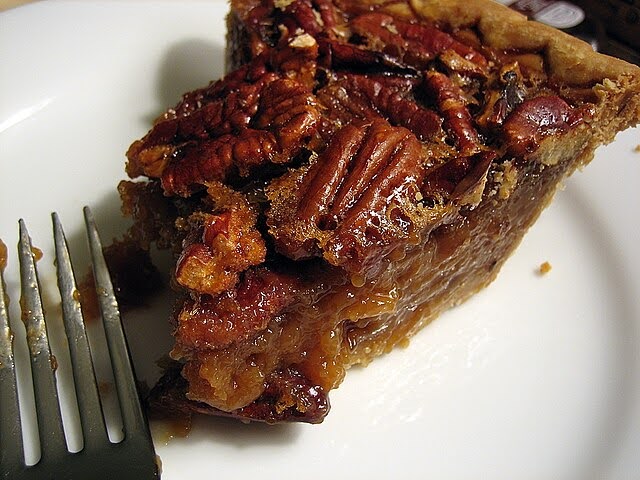
Photo Public Domain via Wikimedia Commons
Here is a confession. Although ranked “only” number 3, if I had a choice of one bite of any item on the list (and maybe of any food, period), it would be a mouthful of pecan pie, warmed and à la Blue Belle. But before we explore why–the pronunciation debate.
Linguists agree that “pecan” is derived from the Algonquin “pakan,” which meant any nut that required a stone to crack. There is no consensus theory on how different regions developed distinct pronunciations. The North, and particularly the Northeast, tends to favor “Pee-can” while the South generally opts for “Puh-Kahn.” As usual, the Midwest is accommodating as long as they can have their Old Milwaukee as a beverage complement, and the West is confused but honors whatever the pie identifies itself as. Some use the hybrid “Pee-Kahn.”
We are firmly in the Puh-Kahn camp. No less an authority than Collin Street Bakery said it best. Those who choose Puh-Kahn are “likely warm, friendly, and deeply rooted in Southern hospitality. For [us], pecans are more than an ingredient; they’re a cherished part of life.” We are also in the Martha Stewart camp, who also chooses Puh-Kahn but who does not correct other pronunciations. Bless their hearts, in the true tradition of Southern Hospitality.
In any event, pecan pie is a nationwide staple, which is why we could not put it at the top of the list. We do revere the plate in Texas all year long, however. Texas is one of the big four pecan-producing states, along with Georgia, New Mexico, and Arizona. Color us surprised about those last two. Many Texans have pecan trees, if not entire groves, so that this one can be truly “locally sourced.”
The essence of any great pecan pie lies in the right balance of texture, provided by the toasted pecans against the gooey, caramel center. Pecan pie making is an art, particularly when one adds other flavor profiles, like chocolate or bourbon. It is hard to make a bad pecan pie, because if it does not set correctly, it is pecan cobbler. It is also hard to make a great pecan pie based on the complexity brought on by the different elements. Only a baker with years of experience has the feel for the amounts, time, and heat that create a plate with just the slightest of jiggle in the center, topped by crunchy, but no longer requiring a stone to break nuts, and a variety of notes to taste.
Wine snobs have nothing on me when it comes to tasting a mysterious delicacy. I count myself lucky to have tasted some of the best. It never gets old.
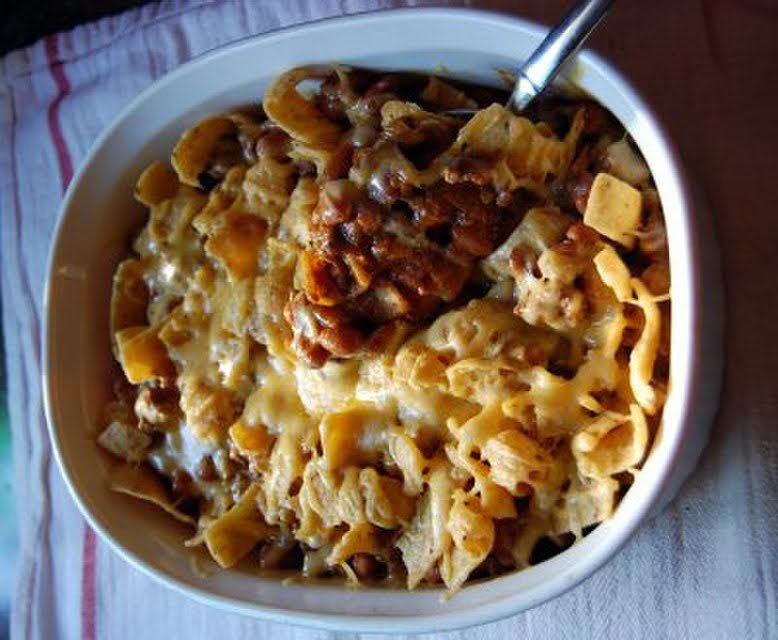
Photo Public Domain via Wikimedia Commons
New Mexico is an underrated state, although residents of the Texas Panhandle (the location, not the occupation) and West Texans are well aware of its beauty and the delightful mountain climate during the summer. But by god, they need to keep quiet about Frito Pie. Did you know they blaspheme about having created this Texas treasure?
To set the record straight, we need to reestablish some basic facts. Fritos, as a concept, originated on the beaches of Mexico. The word means “little fried things.” As a brand, however, Fritos are 100% Texan. In the 1930s, Charles Elmer “C.E.” Doolin owned the Highland Park Confectionery in San Antonio. He was searching for a corn snack to complement other foods when he saw an advertisement in the San Antonio Express for the sale of a business that included a fried corn recipe, some accounts, and a modified potato ricer for making the snack.
Doolin bought the concern for $100 and began experimenting with the corn used as the base for the snack. His kitchen was the laboratory, and his family was the taste-testing corps. When he got what he wanted (Doolin always claimed that the corn he used was the key; as the company grew, he contracted with farmers to grow corn according to his specifications), the family began bagging the snacks overnight. Doolin would tour the city in a Model T, selling bags at five cents each. The rest is history – in 1961, Doolin’s company merged with H.W. Lay’s company to become Frito-Lay.
So, the Frito is all Texan. The exact origin of Frito Pie is murkier. One strain of thought attributes the idea to Katherine Doolin, C.E.’s wife, who contributed recipes that used Fritos to be printed on the packages. Others cite Doolin’s mom, Daisy, and a 1949 cookbook that included the recipe. “Others” here include Doolin’s daughter, Kaleta, who wrote a family/business history. Still, more theories suggest that the recipe originated from Doolin’s secretary, Mary Livingston, or from a Frito’s employee, Mary Nell, as part of a 1950s Frito’s cookbook. The point of any of these stories is that someone close to C.E. Doolin, in Texas, created the Frito Pie.
Our western neighbor stakes its meager claim on Teresa Hernandez, who worked the lunch counter at Woolworth’s in Santa Fe. Teresa relates serving hundreds of Frito Pies during her time there. We do not doubt that what Teresa says is true. But Teresa worked at Woolworth’s in the 1960s. There is documented evidence that Texas recipes for Frito Pie existed more than a decade before then. Teresa and her mom may have come to the idea independently and undoubtedly helped popularize the dish. But the evidence is overwhelming that it originated in Texas.
That debate settled, we love Frito Pie for its simplicity. At its most basic, it is chili poured into a Frito’s bag. Other areas of the country know it as a “Walking Taco,” a “Frito Boat,” a “Taco in a Bag,” or a “Pepper Belly.” Early Texas popularity came from serving the snack at concession stands operating under the Friday Night Lights (which, by the way, are much dimmer in Santa Fe, New Mexico). If a band booster can create something that good, you know it must be simple.
Of course, there are also gourmet Frito Pie versions. The obvious upgrade is to use better beef in the chili, or even venison or buffalo meat. Then there are the add-ins: diced onions, sour cream, peppers at different spice levels, and shredded cheese are the most popular. The one thing that is impossible to upgrade is the Frito.
Great as a working man’s meal or as a tailgate snack, Frito Pie is Texas culinary heaven.
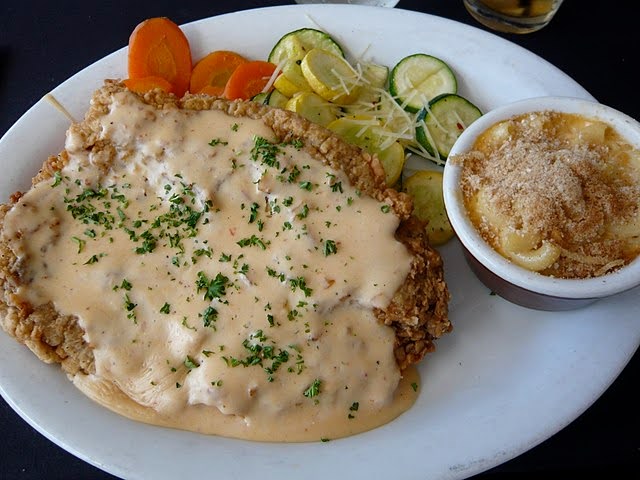
Photo Public Domain via Wikimedia Commons
“I think I’ll have me a chicken-fried” tells all assembled that you are hungry, a carnivore, and sensible. Done right, it is also a foodie order. That last part about being “done right” was not how the dish started and is probably still the exception.
Food historians have a difficult time identifying the first use of what is now known as chicken-fried or pan-fried steak. Cookbooks from around the country started showing recipes in the 1950s, but it was unquestionably sold much earlier. There is some consensus that German and Austrian immigrants to Texas modified their home country recipes for schnitzel by substituting readily available beef from Texas cattle for veal. There are some dissenters. One heretical view, however, is that the dish moved here from Colorado and Kansas. Another pins Lamesa as the birthplace of chicken fried, resulting from a cook not understanding the order. They even have a festival celebrating it. As lawyers like to say, “the greater weight of the evidence” is on the side of the Texas-Germans.
One thing is for sure–we love chicken-fried steak more than anybody else. Our first man of letters, Larry McMurtry, put it this way: “Only a rank degenerate would drive 1,500 miles across Texas without eating a chicken-fried steak.” Larry also said that chicken-fried steak can look “like a piece of old wood that had had perhaps one coat of white paint in the thirties and then had had that sanded off by thirty years of Panhandle sandstorms.” The dichotomy between the revered and the reviled is the whole story.
Chicken-fried steak originated as a way to dress up a cheap cut of beef. At the outset, there was not much of an effort to hide the “cheap cut of beef” part of the equation. Like anything else Texans do, competition soon followed until Texas cooks came closer to achieving the “perfect marriage of meat, batter, and grease.” You can even do a Wagyu chicken-fried steak. If you really want to know how to make a tremendous chicken-fried steak, let Kyle Citrano, an expert, tell you. But you can’t expect that level every time you order, particularly if the dollar figure on the entree is in the single digits.
Robb Walsh, who won James Beard awards for writing about food, suggests three regions for Texas Chicken-fried steak. East Texas means dipping the meat into eggs and flour, as if it were chicken. Central Texas substitutes bread crumbs for the flour. West Texas uses milk and flour, but no eggs. The best preparation is in a cast-iron skillet at high enough heat to bond the flour/breading to the meat almost instantly, but not so high as to evaporate the moisture from a very thin cut of beef. About 350-375 should do.
The art is tenderizing the meat and seasoning the crust. Only about a million theories apply to each step; practice makes perfect. Also, you should check with people who have done it a few thousand times. When you get it right, you have: (1) a delicious, inexpensive meal, (2) one of the more coveted merit badges on your way to Texas Eagle Scout, and (3) constant calls from the potluck committee. The best people will all be there.
We love our list and stand by it. But that is just us. If we missed something or misranked it, let us know. 

 Or info@texasten.com


