


NO SILVER FORKS
Affordable chain restaurants are supposed to be bad; one of the evils we would shed in the twenty-first century. Not good for you, not good for the employees, not good for the animals, not good for the environment…you get the picture. And yet, you and I and hundreds of millions of Americans, plus billions of other humans, regularly eat fast food. Other than the economics, why is that?
Because “fast food” is uncomplicated. Life is full of uncertainty and adversity. Americans generally, and Texans in particular, do not shy from struggle as a concept, but can we have 15 minutes to not think about it? If you are wealthy, perhaps the personal chef will bring you a beautifully prepared yogurt parfait. You and I are going to settle for the Buster Bar (Steve) or the Dipped Cone (M’Lissa).
And you know what? I read “Fast Food Nation” and watched “Super Size Me.” I processed the information. Intellectually, I understand. Yet, whatever the flaws in the system that entice me in, I deserve the Buster Bar. The great chef Paul Prudhomme said, “You don’t need a silver fork to eat good food.” The Buster Bar is irrefutable proof.
What is also irrefutable is that Texans excel at providing non-silver fork food. Tex-Mex is a cuisine based on simple ingredients and straightforward processes; it should come as no surprise that we excel in Tex-Mex chains. Hamburgers come from beef. Who does beef better? Barbecue? Don’t even start with me.
So, we had difficulty naming the 10 best Texas restaurant chains. We considered all sorts of chains, but the defining factors were: (1) Is Texas home turf to the chain (a must); (2) is the chain part of a recognized Texas food group (sorry Maggiano’s); (3) is it affordable enough for a family to eat there without financing pre-approval; and (4) there are locations in multiple Texas cities. Under those parameters, our favorite Texas chain restaurants are:
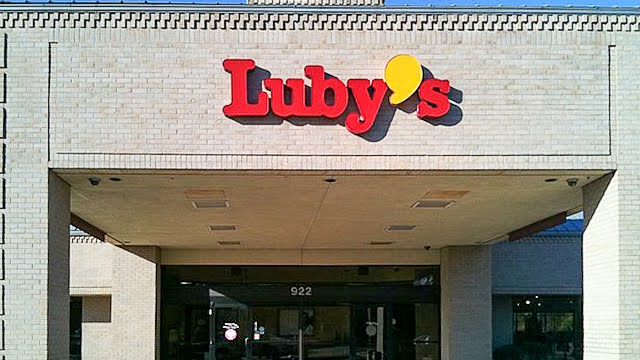
Photo Public Domain via Wikimedia Commons
Everyone loves their grandparents, so everyone should love Luby’s–the place grandparents go to eat. We are grandparents now, so we can safely go to Luby’s. Here is a secret, though – we should have been going to Luby’s all along. “Good Food From Good People” is Luby’s motto. The concept made Luby’s a Texas institution.
Bob Luby grew up in the cafeteria business. His dad, Harry, opened a series of cafeterias in Missouri, Oklahoma, and then Dallas. The first cafeteria to bear the name “Luby’s” was in Muskogee, Oklahoma, but Harry closed it down when the KKK told him he could not hire African Americans. He moved to Dallas, where he and his brother Earl opened several successful locations. Harry grew tired of the business and sold his shares to relatives.
Bob, who had worked at the Dallas locations, had the bug. After returning from the war in 1947, Bob opened a Luby’s in San Antonio with a cousin and three other investors. A second soon followed, a third, then many others. Meanwhile, the Dallas area Lubies were sold to Wyatt’s, although some continued under the Luby’s name. The upshot of the long history is that “Luby’s” generally refers to the stores that were and are under the San Antonio banner.
Bob and his co-owners expanded a small chain into a large one, focusing on value. While the after-church-on-Sunday Luby’s experience may not have been universal, it certainly seemed that way. Dad could feed the whole family and leave with change in his pocket. Everyone got what they wanted, particularly Mom, who wanted not to cook or do dishes. It was certainly filling if not necessarily nutritious. And there was pie. The concept proved successful enough to expand to nearly 200 stores and employ over 10,000 people.
The cornerstone of Luby’s success post-1970 was the LuAnn, which ight officially have been the LuAnn Plate, but is widely known as the LuAnn Platter. The Plate vs. Platter debate swung decidedly to platter when King of the Hill introduced a character named LuAnn (Leanne) Platter in the dish’s honor. Regardless, an entree, two sides, and your choice of bread was comforting comfort food.
The rise of fast casual eateries with more sophistication almost doomed Luby’s. It implemented every efficiency measure under the restaurant sun, then tried the if-you-can’t-beat-them-join-them strategy by acquiring Fuddrucker’s. Nothing worked, and then the pandemic. Luby’s still held valuable real estate and decided to wind down its operations to sell the real estate.
One buyer, however, went into the restaurant business and kept 32 locations open. Thank the Lord and praise LuAnn.
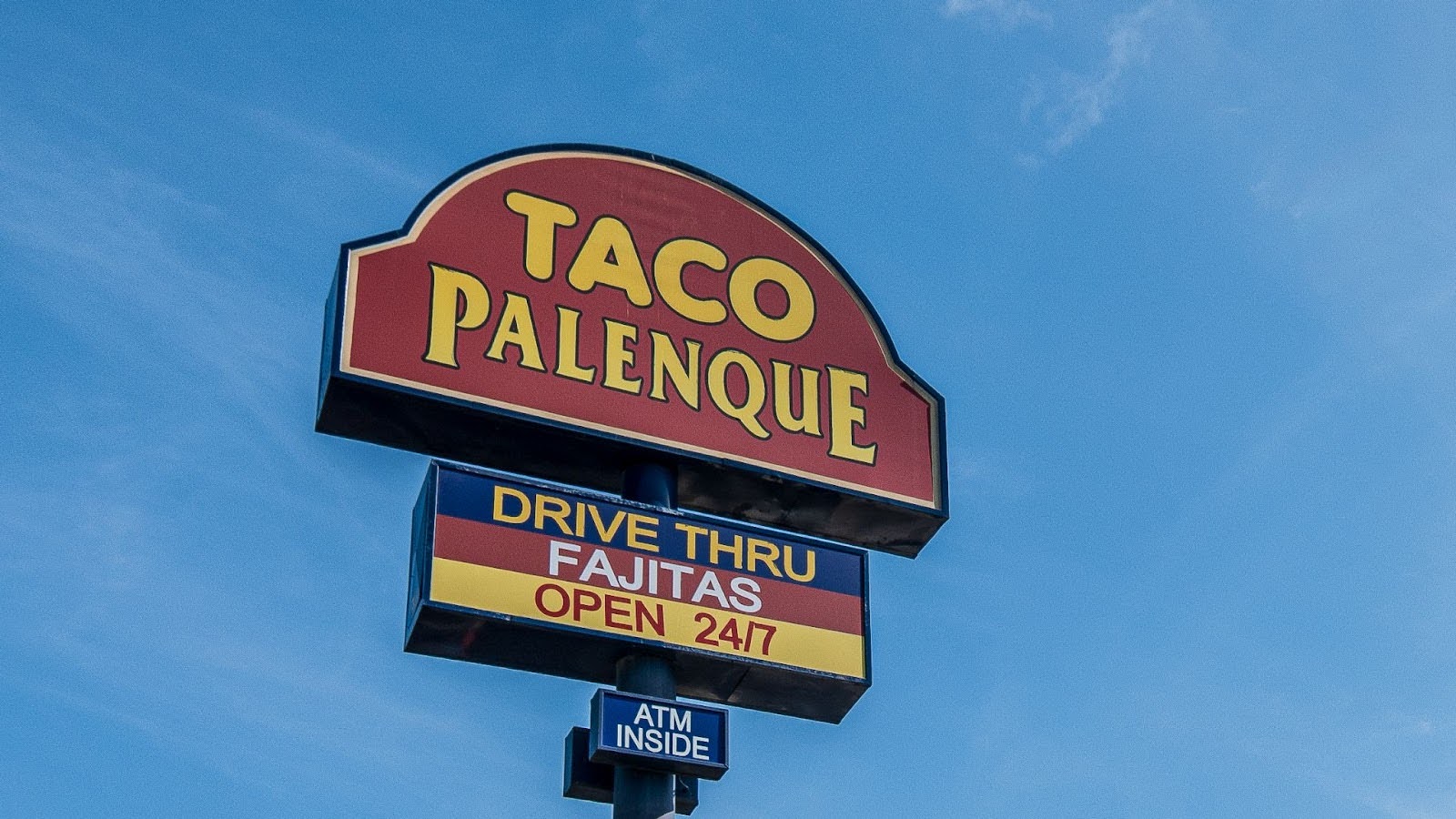
Photo credit Steve Howen
Pancho Ochoa is a better restaurateur than a shoe salesman. In 1975, he gave up his shoe store in Guasave, Mexico, to grill chicken. In five years, he had 85 locations in Mexico, so he moved north of the border. Today, many appreciate his grilling recipes at El Pollo Loco throughout the Southwest. But Pancho was not finished. He sold the U.S. El Pollo Loco chain to Denny’s and patiently waited for his non-compete to expire.
In 1985, Pancho returned to the drawing board to create affordable, authentic Mexican cuisine that went beyond grilled chicken. He chose Laredo, and by 1987, we had Taco Palenque. Texas Ten was blind to Taco Palenque until our trip to Laredo. One trip and we were converts. We love Tex-Mex, but the adjective I would use to describe most fast-food Tex-Mex (Taco Bell, etc.) is “dry.” Taco Palenque is anything but dry. The entire panoply of flavors from Mexico accompanies every dish.
The chain is still relatively young, with U.S. expansion picking up steam. There are now 42 locations, and we would not be surprised if ten years from now there are 500. Their motto is a perfect description of their food: “Un rinconcito de nuestra tierra–a little piece of our homeland.”
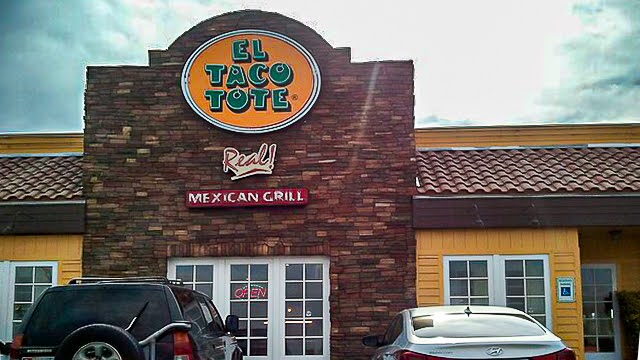
Photo Public Domain via Wikimedia Commons
We did not have a traditional 8 and 9, because El Taco Tote’s story is so similar to Taco Palenque’s, and their food is equally awesome. This chapter begins in El Fuerta, Sinaloa, Mexico, with an Abuelita who raised seven children and then multiple grandchildren around a communal table. The community’s laborers began to gather at her table, too. One aspect that everyone remembers was her buffet of salsas.
The family formalized that community table with the restaurant Las Nubes. By 1988, a younger son started El Taco Tote in Ciudad Juárez. The chain’s first U.S. store was across the street in El Paso. Today, they are up to 20 stores in 11 cities.
As you might guess, the star at El Taco Tote is the taco. It is endlessly variable with all the success and salsas, a straight line back over 100 years to an Abuelita and her community table.
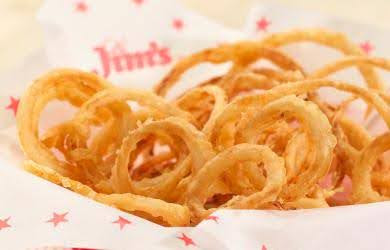
Photo credit Jimsrestaurants.com
Our San Antonio is showing with this selection, but Jim’s has two Austin locations, so they qualify. We know we are biased, but the Frontier Burger is so superior to any other fast-casual burger in Texas (we know, we measured it scientifically) that even with our bias, Jim’s belongs on the list.
And here is the thing-the Frontier Burger is really a side dish to teh main attraction, the delightfully light, playful, just the right amount of crunchy onion rings. I have never done it, but I swear I could order three baskets of onion rings for my meal. Pair it with one of Jim’s classic shakes, served properly in a tall glass container, and you have your own little piece of culinary heaven.
Jim’s story is also impossibly Horatio Alger Americana. In 1947, while Bob Luby was opening his cafeteria, a young Jim Hasslocher started a bicycle rental stand in San Antonio’s Brackenridge Park. The first food item he sold was watermelon slices. In the process, he met his wife and future business partner, Velva. Once teamed up, they moved on to burgers, fries, and those impossible onion rings. Soon, the bicycles were an afterthought. Jim and Velva were operating the Frontier Drive-In. Jim persevered for 68 years until his passing in 2015.
What a legacy. Jim’s today are not new, and they are not new retro. They are honest family restaurants as they existed in the 1960s. So try it and concentrate on the food-we dare you not to love a Frontier Burger, onion rings, and a shake.

Photo Public Domain via Wikimedia Commons
What, exactly, is Chili’s? The name would suggest a Southwestern restaurant, but the actual history revolves around Tex-Mex, and it’s most famous promotion (perhaps the most famous restaurant promotion ever) features their ribs.
Chili’s is all of those, but its name does derive from Chili. In 1967, Larry Lavine attended the first-ever Terlingua Chili Cook Off. When Larry decided to open a restaurant, he aimed to capture the good times vibe that the chili cook-off produced. The first menu was noticeably sparse, incredibly sparse in comparison to what the Chili’s menu evolved into. You could order chili (with beans or over chips), a sloppy hamburger in a basket, or soft tacos. Alcoholic drinks were a margarita, sangria wine, or a Schlitz beer. Larry threw open the doors on Greenville Avenue, and people came in droves.
The margaritas were a key ingredient. Sidenote – is there any drink more unisex than a margarita? Anyway, as of today, no company sells more margaritas than Chili’s. The future movers and shakers of Dallas from that period are all older than they ever thought of being, but most of them remember what a hot spot the Greenville Avenue Chili’s was. There was sufficient momentum for Larry to reach 28 stores by the early 1980s.
Enter Norman Brinker, a remarkable Texan. He was an Olympic equestrian athlete, a world-class pentathlete, and husband to one of the greatest tennis players of all time. He also created the restaurant as we know it. President of Jack & Box, and then founder of the Steak & Ale Chain, which changed the restaurant industry by pairing better food with a more relaxed setting. Brinker sold Steak & Ale to food giant Pillsbury, then went on to lead Pillsbury’s restaurant division, which included Bennigan’s ( a Brinker concept) and Burger King.
More of an entrepreneur than a corporate type, Brinker left Pillsbury to buy Lavine’s 28-store Chili’s chain. Brinker applied what he learned from his work at Steak & Ale and Pillsbury to grow Chili’s into the huge chain it became. His company was also behind Maggiano’s, Romano’s Macaroni Grill, Cozumel’s Coastal Mexican Grill, Corner Bakery Cafe, and Eatzi’s. Chili’s was the centerpiece, and it became a combination family night/date night restaurant that sold ribs, burgers, tacos, and margaritas by the truckload. Somehow, Brinker managed to combine corporate efficiency with the fun of the Terlingua Chili Cookoff.
Brinker retired in 2000 and died in 2015. Not surprisingly, Chili’s lost its steam and appeared to be on the path to second-tier citizenship. As of late, however, Chili’s has rallied. It invested heavily in modernizing its look while simplifying the menu (although we are still well beyond just chili, tacos, and burgers). While casual restaurants as a whole have floundered post-pandemic, Chili’s is back to the head of the class. You can still get a mean margarita there.

Photo credit Steve Howen
For a long time, El Fenix was a Dallas thing. They have now grown to a chain of 14 locations, spanning from Waxahachie in the south to McKinney in the north, and extending from Greenville in the east to Weatherford in the west. Although still one of the best value propositions in Texas eating, El Fenix varies from Taco Palenque and El Taco Tote in that it is much more of a “go out to eat restaurant” as opposed to a “grab a bite to eat restaurant.” The common denominator is great food. Given how long El Fenix has been doing it, their excellence in that area is unsurprising.
Miguel “Mike” Martinez was born into abject poverty in Hacienda del Potrero, Nuevo Leon, Mexico. He began working in the mines as a mule train driver at the age of seven to assist his widowed mother. He fled Mexico in 1911 at the age of 21 as the Mexican Revolution plunged that country into chaos. He met Faustina Porras, another Mexican immigrant in Dallas; they married in 1915 and opened the Martinez Cafe in 1918.
The Martinez Cafe was on McKinney Avenue, which is now part of the high-rent district between Uptown and the State-Thomas area. Then it was the barrio, known as Little Mexico. Nevertheless, the Martinez Cafe initially started as an American food-only establishment.
Martinez, however, began spicing his dishes with Mexican flavors and prodding his guests for feedback. His energy was boundless; he had given up working three jobs for his cafe. To make ends meet, he did it all – he hosted, waited tables, cooked, bused tables, and washed dishes. His energy and infectious personality paid off, and he gained a following.
The following liked the Mexican flavoring enough that he kept adding it until the food was neither American nor Mexican. Similar transformations were occurring in San Antonio at about the same time, so there is doubt as to who was first, but those two restaurant scenes lay claim to the birth of Tex-Mex. By 1918, Martinez had gained enough confidence to relocate to a larger space and offer a menu featuring only his new dishes. He named his new restaurant the El Fenix Cafe because he had a penchant for the bird that rises from the ashes.
The company dates its history from the 1918 El Fenix Cafe, not the 1915 Martinez Cafe, making the chain 107 years old this year. As no restaurant from the early 1900s San Antonio Tex-Mex scene has survived, El Fenix is the oldest Tex-Mex restaurant in the state. Legend also has it that El Fenix invented the combination plate as a way to cut back on dishes.
We know that Mike invented the tortilla machine because he sold the invention for the princely sum of $200.00 to a fellow entrepreneur. Mike thought it was a sharp deal until the buyer, Herman Lay, used the machine as a key piece of equipment to found a small operation that became known as Frito-Lay. We also know that Enchilda Wednesday came long before Taco Tuesday, as it started at El Fenix in the 1950s.
El Fenix is also the most prominent downtown Dallas restaurant and was long a center of Dallas social life. Martinez purchased the building next door and converted it into a ballroom featuring a house band. Huge big band acts of the day like Glenn Miller would finish their concerts at the Adolpheous or Baker Hotels, grab some Tex-Mex and then sit in with the El Fenix band late into the evening. Dallas must have been hopping then, as El Fenix was open 24/7 until wartime curfews put an end to that practice.
Three of the Martinez sons served in World War II. When they returned safely, Mike and Faustina decided to hand over the business to their children. By now, the Martinezes were wealthy; they split time between Dallas and Mike’s hometown, where he poured his heart and fortune into upgrading the standard of living. Despite returning to Mexico, Mike finally gained U.S. citizenship in 1947; Faustina had won her status in 1941.
Mike died in 1956; Faustina survived him by 34 years. Afraid Faustina would be lonely, the kids encouraged her to take up dancing. She did so with a vengeance and became known as “Mama Cha Cha.”
The restaurant flourished under the children’s leadership, although the addition of the Woodall-Rogers freeway in the 1960s meant the end of the original cafe and ballroom. The parking lot for the ballroom was just to the north of the highway; it became and remains the site of the reconstructed cafe.
The food remains consistently superb across every El Fenix location we have visited. Try it and enjoy the history as a side dish.

Photo Public Domain via Wikimedia Commons
Phil Romano is another great restaurateur who often collaborated with Norman Brinker. Romano started Fuddruckers in San Antonio and owned it through its heyday. He moved to Leon Springs, north of San Antonio, to launch Romano’s Macaroni Grill and Cozymel’s Coastal Mexican Grill (originally named Nacho Mamas) into the Brinker empire. While living in Leon Springs, he also took note of a local establishment, Rudy’s Country Store.
The Leon Springs Rudy’s, owned by Mac “Doc” Holliday, opened in 1989 and added a meat market the next year. Holliday introduced Rudy’s own “Saus” to local plaudits. Romano saw an opportunity and developed a concept that reversed Holliday’s elements, putting the barbecue at the center with the country store playing a supporting role. Romano sold the concept to a restaurant group headed by Creed Ford. The rest is history: 56 locations, 39 of them in Texas.
Rudy’s is ranked this highly because it took the combination of Holliday, Romano, and Ford to crack a code that had long puzzled the restaurant industry. How do you replicate consistently good barbecue, given that barbecue is notoriously inconsistent? Before Rudy’s, there was a definite inverse ratio between the number of locations and the quality of the barbecue.To be clear, Rudy’s will never be an elite barbecue restaurant ala a Franklins, Snows, or Burnt Bean. There is not enough quality meat or a sufficient labor supply to achieve that level across 50 locations. The saving grace is that barbecue does not have to be Franklin-quality to be delicious food. To our mouths, Rudy’s serves up moist, flavorful brisket, frisky sausage, and tender ribs. We have also never waited hours, hoping against hope that the brisket does not run out.
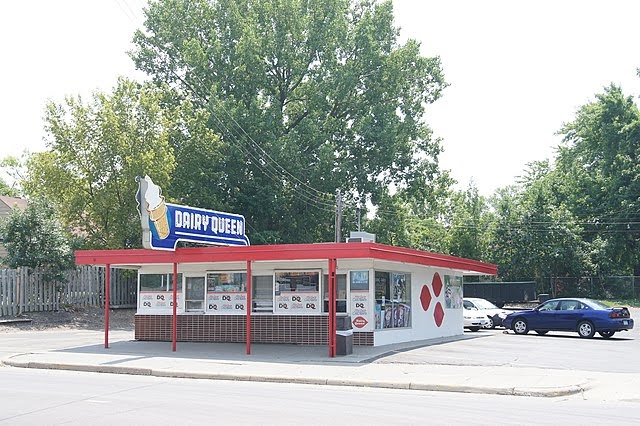
Photo Public Domain via Wikimedia Commons
As a young lawyer in the early 1990s, I was reading a case to find some long-forgotten point of law. The case involved Dairy Queen and required the court to detail the company’s history. I was stunned to learn that Dairy Queen did not originate in Texas. Instead, the original Dairy Queen is in Joliet, Illinois (1940). That really threw me for a loop because I was born a mere 25 miles away. I had an aunt, uncle, and cousins in Joliet, and somehow, I missed this vital piece of information for 30 years?
Such is the power of the connection between DQ and Texas. The restaurant has been called “the Texas Stop Sign” for a generation and for a reason. Texas far and away leads the nation in the number of Dairy Queens (over 500) and their propensity for placement in small towns led to the slight embellishment that every Texas town had a Dairy Queen. Our greatest writer perpetuated the stereotype by prominently including Dairy Queen scenes in Texasville and Walter Benjamin at the Dairy Queen. Stereotypes are stereotypes based on truth. If you want to learn about the comings and goings of the small towns where blizzards are readily available, the DQ is the best place to start. McMurtry called them “taverns without alcohol.”
While DQ did not originate in Texas, DQ has a Texas-based power center. Rolly Klose was the first DQ franchisee in Texas, installing an Austin location in 1947. Klose sold franchise rights throughout Texas with loosely drawn agreements. These agreements capitalized on a key omission by DQ corporate headquarters.
In many parts of the country, Dairy Queen was a seasonal business that depended almost entirely on its ice cream treats for revenue. As you may have noticed, there are fewer seasons in Texas. As a result, the Texas franchisees eyed a year-round business offering food items beyond ice cream. The franchise agreement was specific and tightly written on all aspects of what headquarters perceived as its bread and butter, the soft-serve ice cream. The agreement was silent on almost everything else.
That silence allowed Klose and the other Texas franchisees to develop their own menus. As shocked as I was about DQ’s origin story, I was just as stunned to learn the Hunger Buster was sold only in Texas Dairy Queens. This independence did not make DQ International particularly happy, but there was not much they could do about it until they reacquired Klose’s franchise rights, which happened in 1980.
That gave DQ International a better legal position. The Texans countered by banding together to form a Texas-only DQ structure with its own Texas-specific marketing. That entity gave the Texans a better bargaining position. The two sides warily co-exist with occasional flare-ups, but no all-out war.
It only matters to us because the Texas DQs need the Hunger Buster, steak fries, and the like to stay open. I have nothing against a Hunger-Buster, but I would not make a memorable trip for it. The Buster Bar, The Dipped Cone, or a Blizzard made to order, however, is a different story. Each is a wonderful mouth massage of cold that leaves you feeling warm. For that and for the central role DQs have long played in our communities, this is a deserved spot on the list.
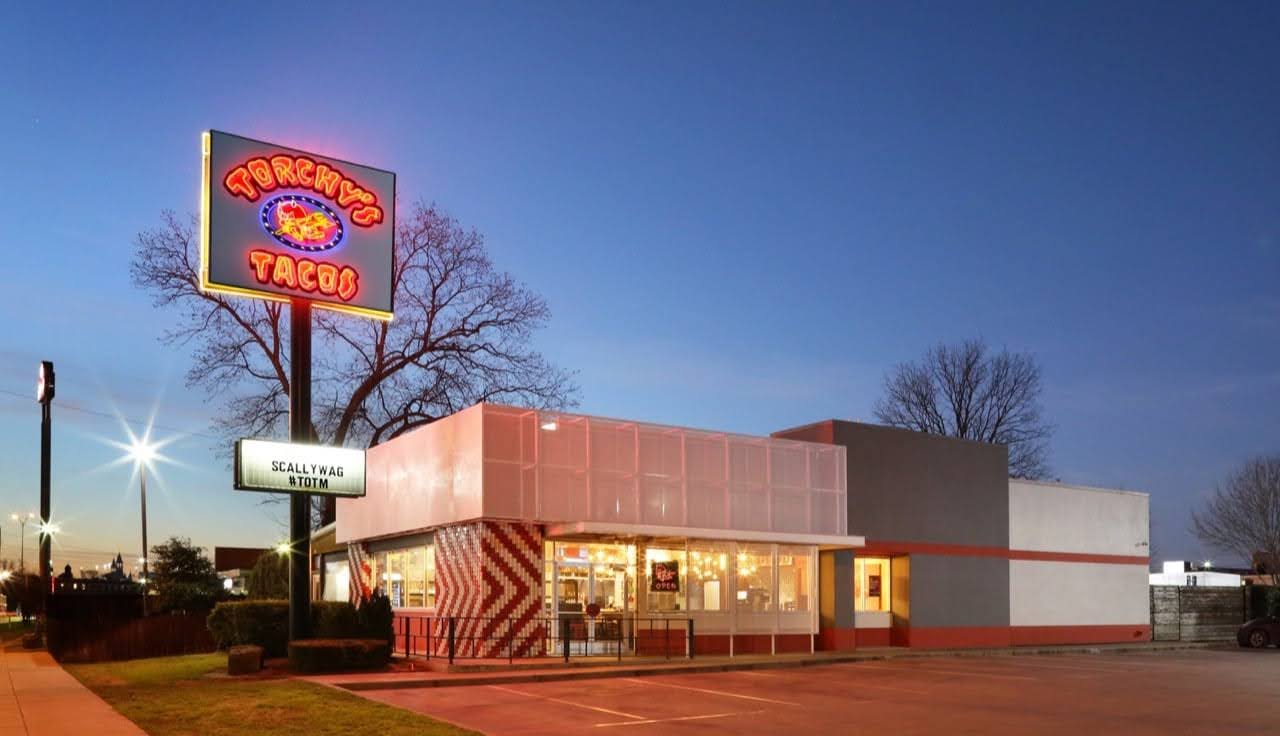
Photo Credit Torchystacos.com
Generally, we eat at the Waco/I-35 Torchy’s Tacos at least once a week, most often for breakfast. We have had the occasional service issue, as will happen when one frequents a restaurant more than 50 times in a year. Never once, however, have they betrayed their motto of “Damn Good Tacos.” The question is, why is this consistency enough to overcome the three other, much longer-established Tex-Mex chains on the list?
There are currently 132 Torchy’s across 16 states, though primarily in Texas. That is more than twice the combined number of El Fenix, El Taco Tote, and Taco Palenque locations combined. The market is telling us something. Second, Torchy’s concept is newer. Started as a food truck operation in 2006, the first brick-and-mortar did not arrive until 2010. That means Torchy’s has a decided edge in ambiance and the non-food part of the consumer experience at the other taco-only stores. Third, Torchy’s is constantly experimenting, while keeping its tried-and-true available.
The combination of these three factors moves the needle. Quick tacos are now a legitimate date-night or date-morning food—one giant leap for mankind.
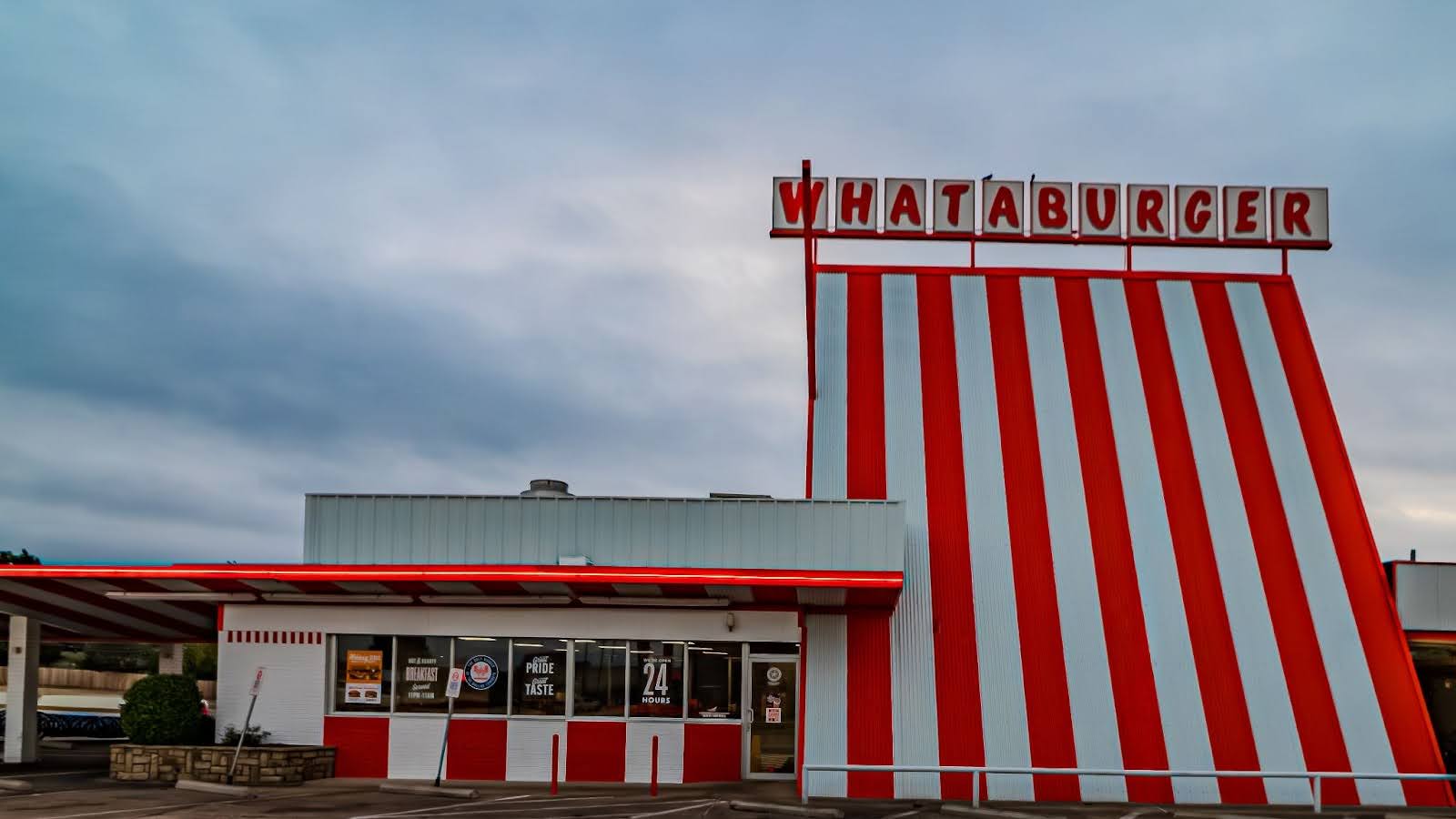
Photo credit Steve Howen
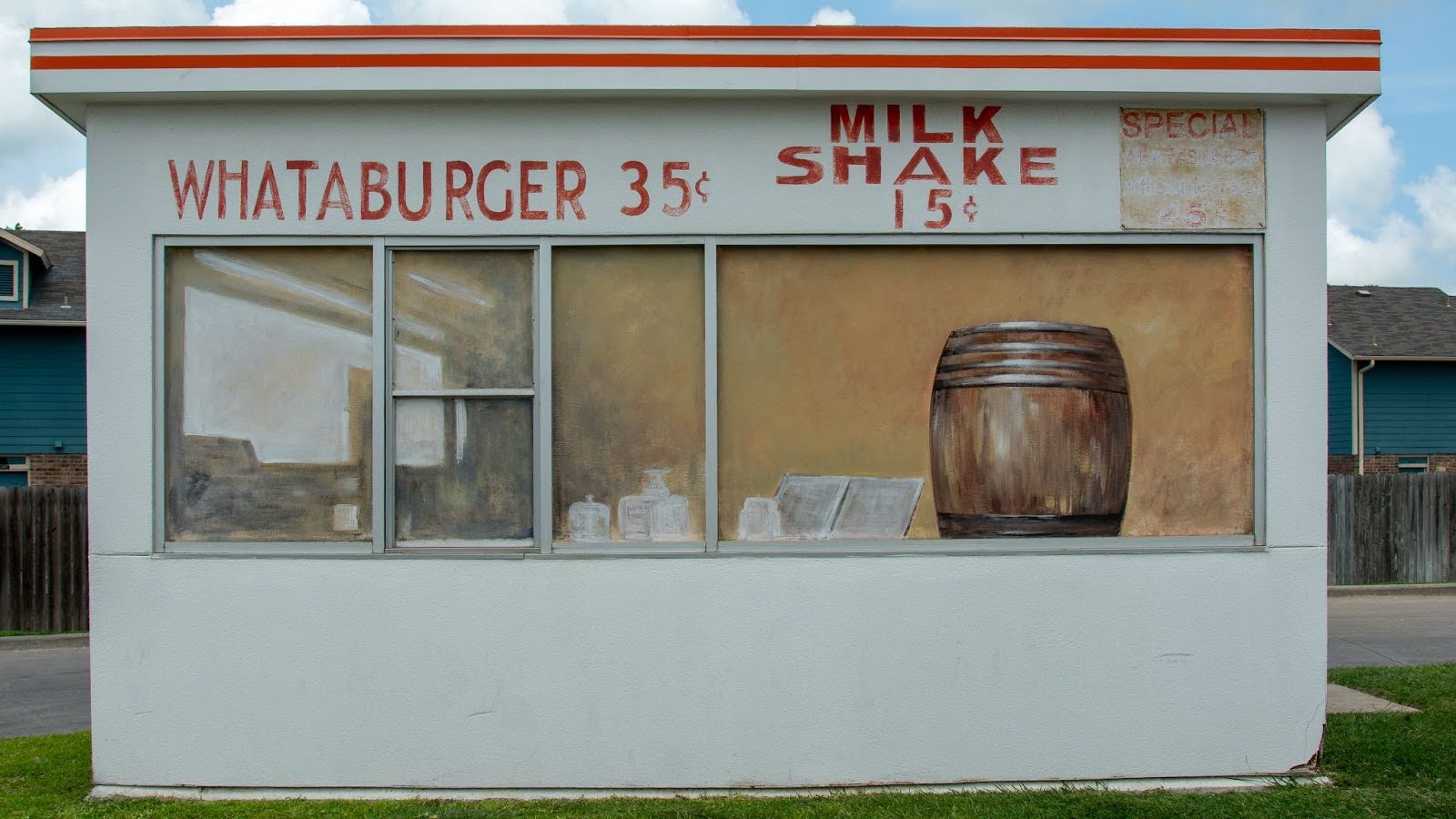
On June 14, 2019, sirens might have blared across Texas. Barbarians were at the gate and they were after a crown jewel, Whataburger. Strike that, the barbarians had slipped in unnoticed and taken the prize before Greg Abbott could deputize enough Texns to halt the invasion. What was to become of us; what of the honey butter biscuit that we served as a snack at my daughter’s wedding?
Hopefully, the six years that have passed since the purchase of a controlling interest in Whataburger by outside agitators are signs of the minimal changes that Texas’s favorite hamburger stand must endure. The new store design is sharp-looking in its abstract nature, but it does not pay sufficient homage to the A-frame shape that signifies the company’s heritage, a small mark against the buyers. As for changes to the food, the company insists that it made no changes to the procurement or preparation process, despite rumors to the contrary. There was a period when the bun was different, but that was right before the purchase; the traditional bun returned before the agitators swooped in.
Three things happened post-purchase. First, the pandemic, but even we cannot blame that on the buyer. Second, the buyer invested heavily in technology, as every leading fast food company has done. Again, no shame there. Third, the buyer pushed for more aggressive growth, mainly in areas outside Texas. We look at it this way: having more locations outside the state does not make Whataburger less Texan –it makes the rest of the United States more Texan.
So we think of BDT Capital Partners, the Chicago-based acquisition group, as similar to Paul the Apostle. Somebody who we were justly suspicious of at the outset, but who is doing serious work spreading the gospel of Harmon Dobson.
It was Dobson who sought a business venture after spending much of World War II in northern Africa working on defense construction. His idea for entering the hamburger world was to serve a burger so large that it required two hands to hold. That would be unusual enough to induce a customer reaction along the lines of “What a burger!” The first location was a small frame stand on Ayers Street in Corpus Christi. Although the original stand is long gone, a rough replica remains in its place.
Less well-known is that Dobson started with a partner, Paul Burton. They almost immediately had a partner disagreement over pricing strategy. They were unable to resolve the pricing strategy, so they opted to go their separate ways, with Burton taking the Whataburger rights in San Antonio and Dobson retaining the rights everywhere else. Burton apparently had some operations in San Antonio before he died in 1970, but the company or other franchisees subsequently took them over. Of all the Texans disappointed by the 2019 sale, estimated to be at a value of around six billion dollars, we imagine that Paul Burton’s grandchildren may have shed the most tears.
Dobson was visionary, a showman, and a pilot. He liked to fly around Corpus Christi dropping coupons. Those flights convinced him of the need for distinctive architecture. Thus, the iconic A-frame, featuring bright orange and white stripes, first appeared at a store in Odessa, Texas, in 1961. As famous as those buildings were, Whataburger only constructed about 80 of them. Building codes and space limitations made them less useful than hoped. The Odessa location fell to the wrecking ball in 2019 (again, not a BDT decision) and very few of the A-frames remain, even fewer that continue to operate as a Whataburger. We recently paid homage to one of the few in Mesquite.
Dobson died in a plane accident in 1967. The business stayed in his family, but for a while, others handled active management. Not in a good way. By the early 1990s, the company was a mess, having strayed far from its core mission and at odds with its franchisees. Harmon’s son Tom stepped into the breech and righted the ship. The family reportedly maintains a minority interest in the business. As do we all, even if it is sentimental rather than monetary.
We love our list and stand by it. But that is just us. If we missed something or misranked it, let us know. 

 Or info@texasten.com


