


Field Guides
Wellington, Texas
(Collingsworth COUNTY)
Cattle trails, prairie sunsets, and the calm of open Texas sky.
Highlights
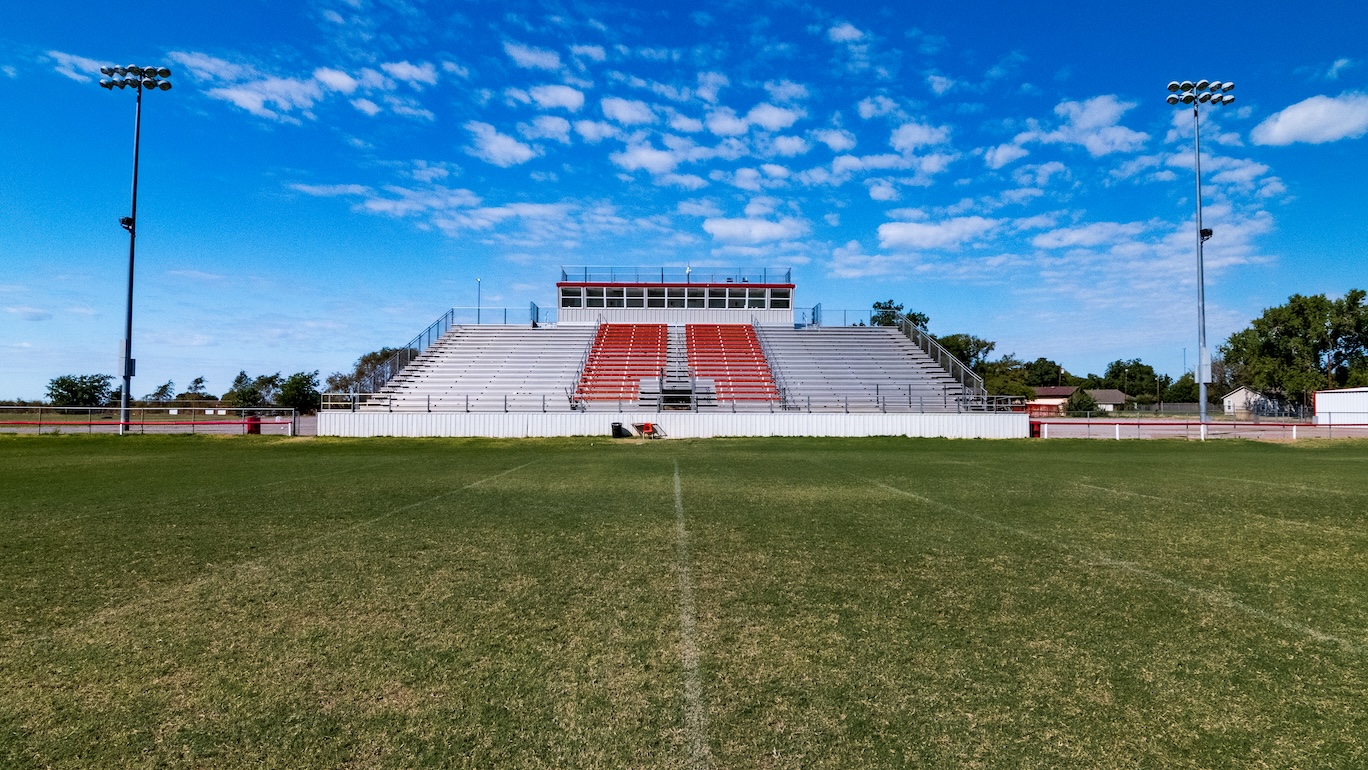
Wellington, the county seat of Collingsworth County, is a typical Panhandle town. It is understated, built on ranching and farming, and full of solid, hard-working people. You will not likely be vacationing here. If you are traveling through, you will be driving north or south on US Highway 83, which parallels the Panhandle’s eastern border with Oklahoma.
The first highlight is a wide-open space with an endless sky. The man-made feature you may be drawn to is the charming and renovated Ritz Theater downtown. The theater regularly attracts regionally prominent talent. The hunting is excellent with White-tail deer, turkey, and bobwhite quail possible.
The County Courthouse
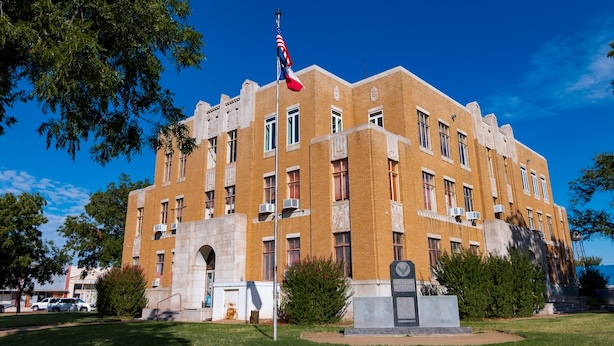
It is a good thing that Collingsworth County only needed to rebuild its courthouse once, because emotions run high around county seat decisions. First, there was considerable politics and influence from absentee English ranchers to create Wellington as the new county seat rather than Pearl City, the original town holding the honor. In fact, Wellington draws its name from the Duke of Wellington, a distant relative of the first owners of the Rocking Chair Ranch. The heavy-handed English got their way, but no friends from that decision.
Once established in Wellington, the county fathers decided to build a proper courthouse in the early 1890s, but the local populace saw no need for the debt and the taxes that went with it. So much so that the lives of the county judge and commissioners were at risk. The powers that be remained resolute, however, and a proper seat of administration and justice arose in downtown Wellington.
In 1931, the leaders decided a new structure was needed, and it stands today. Constructed in an Art Deco style with orange brick and white cement accents, the courthouse occupies the center of the square. The exterior is what a novice architect critic (i.e., Texas Ten) might call subdued Art Deco, with only the arched entryways and column tops standing out. The interior, however, really shines with impressive detailing. The district courtroom is impressive and would make a great movie set for a trial in the 1920s–1950s.
Things To See And Do
Let’s set expectations first. There are just over 2,500 people in Wellington County with no interstate in sight. The closest state parks are more than 70 miles away (Copper Breaks near Quannah and Caprock Canyon near Turkey). Your options are limited.
But remember our introduction about solid people? Wellington and the surrounding areas went all in on reviving their classic downtown theater, The Ritz. Their work and donations paid off. First-run movies, country stars, comedy shows, and even opera singers have graced the stage. The shows draw fans from surrounding counties, including Oklahoma.
Hunting also draws visitors. The Salt Fork of the Red River runs near Wellington, allowing for a variety of targets. Hunting guides and leases can be here (type “hunting” in the description field), but you might want to try Mill Iron Ranch for the bespoke experience. The other attraction near the Salt River Fork, about six miles north of Wellington, is Pioneer Park. There is a lot of history there, from Quannah Parker to Bonnie and Clyde. In town, the County History Museum and Arts Center takes up three historic buildings.
Food, Drinks, And Music (Eat Local!)
Suit and tie will not be required. Wellington specializes in cafes and comfort food. Select among Two Rivers Family Restaurant, The Getting Spot, or Come and Get It. For a straight-up good burger, try My-T Burger. All-day sandwiches and desserts at Angel’s Subs & Sweets. Tex-Mex comes from Monas Firehouse Cocina.
Collingsworth County was one of Texas’s last dry counties until 2017. Recently liberated citizens can enjoy their freedom at Brix Bar & Eatery in a sophisticated space. An excellent option pre-show or post-show at the Ritz.
Where To Drop A Dime (Shop Local!)
Shopping in Wellington is more about essentials than extras. If in the area and in the mood for browsing, you might want to check to see if the Swaggin Wagon is open for business. It is a mobile boutique and decor store with Western-chic goods. Gift stores include TBerrys and Carol Ann’s Flowers and Gifts.
Special Places To Lay Your Head (Stay Local!)
To find a unique overnight stay in Wellington, you are likely to go with a short-term rental. Some examples include Texas Sunrise, The Loft, or the Highway Hideout.
For The Professional Traveller (Campgrounds and RV Parks)
Special Events
One of the coolest parties in Texas is “Wild & Free on 83” where several cities rotate hosting the festivities. Wellington’s turn is usually early August. As in most rural Texas counties, the Junior Livestock Show is a big deal each January. As we have already mentioned, The Ritz Theater hosts multiple events.
Fore! (Golf Courses)
Although Wellington Country Club is the name, this is an enjoyable (depending on the West Texas wind) nine-hole municipal course.
Wellington Country Club
3949 County Rd 210
Wellington, Texas 79095
(806) 447-5050
Getting To Collingsworth County
Collingsworth County is at the southeast corner of the Panhandle, bordering Oklahoma. US Hwy 83 runs North and South through the county and through Wellington. State Hwy 203 is the East/West thoroughfare 203 through Wellington, merging into State Hwy 287 to the West and getting you to Amarillo, the closest city, in approximately an hour and a half. The closest interstate, I-40, runs East and West, intersecting with Highway 83 about 30 miles north of Wellington. That means Wellington sits four and a half hours of drive time Northwest of the state’s geographic center in Brady.
Flying a major carrier is doable to Rick Husband Amarillo International Airport if you want to use Southwest, United, or American. Smaller craft can try Marian AirPark in Wellington or Childress Municipal Airport, 30 miles south.
History
Interesting, to say the least. The Apache controlled the area from prehistoric times until the early 1700s. The rise of the Comanche and Kiowas transferred power to those tribes until the 1870s. The area was prime Buffalo ground, which was significant. As Anglo settlers streamed into Texas, they constantly pushed the frontier westward. The farther west and north the settlers moved, the more they threatened the Comanche and Kiowa. Wellington was too far north and west, so there was no armed conflict between settlers and Native Americans.
Instead, the settlers came in the mid-late 1870s after the Army removed the majority of the Native American warriors to reservations in present-day Oklahoma. There were enough settlers for the county to be recognized in 1876, although it was not formally organized until 1890. The County was named for James Collinsworth, a signer of the Texas Declaration of Independence and Texas’s first chief justice. A paperwork error in the enacting statute dropped the “g” from the namesake, so the county is misspelled.
The original industry was buffalo hunting, which proved to be lucrative and short-lived. In the 1880s, the focus turned to ranching. Texans drove a sizable herd to the area, and it multiplied. With investors behind them, they bought significant railroad land as a permanent home for their herd. So far, so good.
Across the Atlantic, English nobility took a shine to Texas. Through a series of transactions, much of Colingsworth County (and neighboring Wheeler County) fell into the hands of a British Syndicate, Rocking Chair Ranche Company, Ltd. Absentee management is rarely a good idea. To make matters worse, the improbably named Archibald Marjoribanks, younger brother of the Baron of Tweedmouth, was the syndicate’s man on the ground. “Fish out of water” is an understatement. A decade later, the syndicate was liquidated.
In the meantime, the British annoyed everyone but managed to get the county seat named after their distant cousin, the Duke of Wellington. The Rocking Chair brand continued, but the syndicate’s failure, severe weather, and new laws making large ranches more challenging to protect meant smaller operations became the standard.
Smaller ranches were not much more successful, but it became clear that the land could be farmed. In the 1890s and early 20th century, the focus again shifted to corn, wheat, and cotton production. Railroad connections to Wichita Falls and other Panhandle towns amplified farming prospects. The area prospered.
The Great Depression and the Dust Bowl stopped the progress, as the number of farms and the county’s population dropped in the 1930s and 1940s. Even after the economy stabilized and water returned, the increased mechanization in agriculture meant fewer people were needed to farm the same amount of land. The population continued to dwindle.
One notable interlude occurred in 1933, when the Barrow gang, specifically Bonnie and Clyde, posted up near Wellington. Clyde’s disdain for the law included speed limits, and he drove his car off a bridge into the Salt Fork of the Red River, seriously injuring Bonnie. Against Clyde’s wishes and not knowing who they were dealing with, local citizens tried to help. The law became involved when they realized who their visitors were, and things went further south. It ended with no one dead (a minor miracle), but local deputies tied to a tree, and the Barrows headed to Oklahoma. Only months later, Bonnie and Clyde’s run of mayhem ended in Louisiana.
Although there is oil in the area, the quantities are not like those found to the west in the Panhandle. Thus, today Collingsworth County is a productive county with an agricultural emphasis and a decidedly rural outlook.
Collingsworth County’s population is diverse for rural Texas at 54% Caucasian, non-Hispanic, 17% mixed Anglo and Hispanic, 14% Hispanic, 8% African American, and 7% divided among other races and mixed race other than Anglo/Hispanic. Median income falls below state and national averages, with a substantial poverty rate and lagging educational achievement.
Collingsworth County is politically like the rest of the Panhandle: deep red. In the most recent presidential election, 89% of the county’s votes went to the GOP. While traditionally conservative, the county had competitive elections until 2000; from that point forward, the red has only gotten redder.